
7 Top Signs of Wiper Failure You Shouldn’t Ignore
A sudden downpour on the motorway is a bad time to find out your wipers are past their best. If every sweep leaves smears, skips across the glass or sounds like it is scraping the windscreen, your view of the road can disappear in seconds. Knowing the top signs of wiper failure gives you time to replace worn blades before the next wet-weather drive.
Wiper blades are easy to overlook because they do a small job – until they cannot do it properly. Heat, UV exposure, dust, salt air, road grime and long dry spells all take a toll on the rubber. In Australian conditions, a blade that looked fine a few months ago can quickly become noisy, cracked or ineffective.
Top signs of wiper failure to watch for
1. Streaks that stay in your line of sight
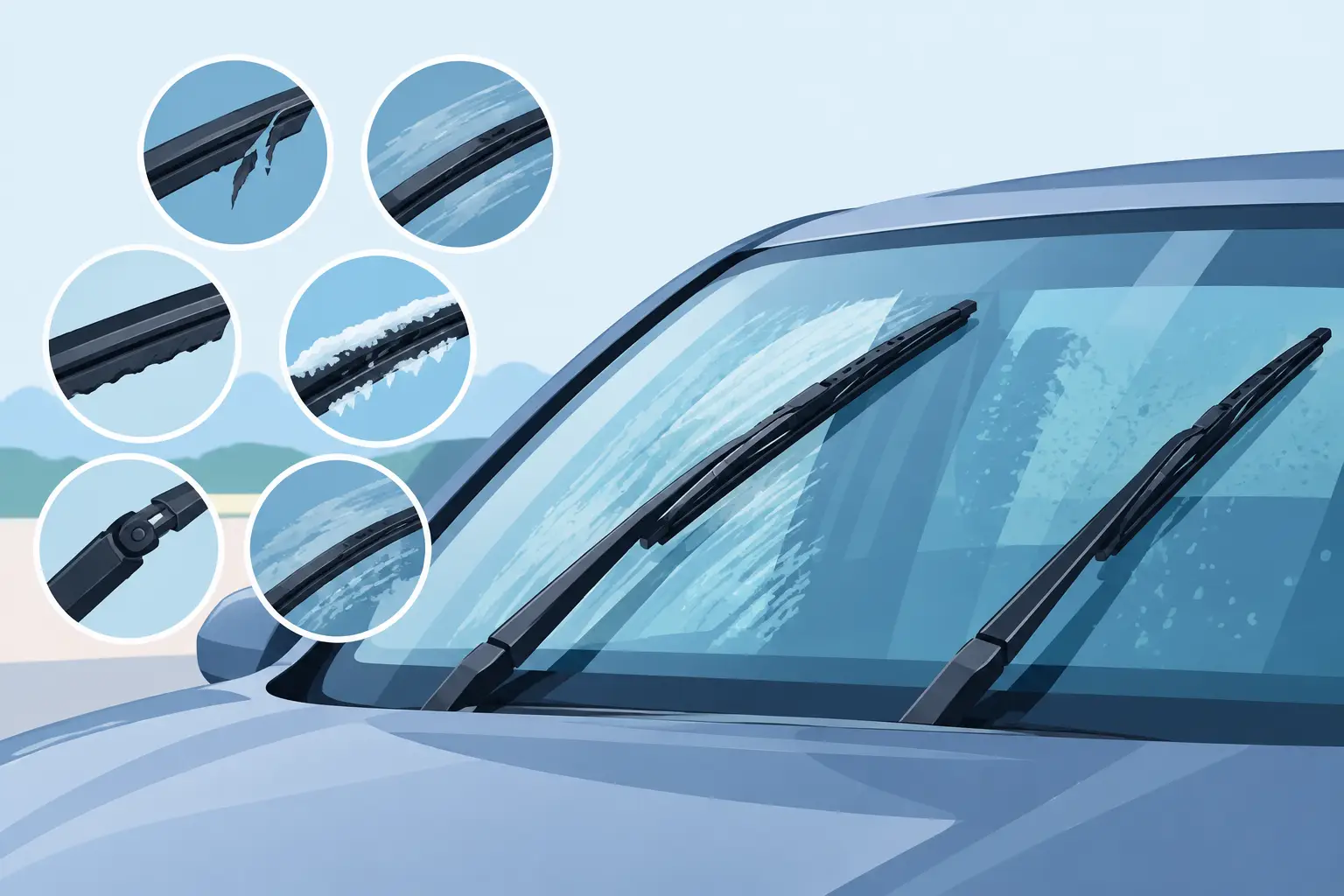
A good wiper blade should leave the windscreen clean and clear after each pass. If thin lines of water remain, especially directly in front of the driver, the rubber edge may be worn, split or no longer sitting evenly against the glass.
A dirty windscreen can also cause streaking, so clean the glass and wipe the blade edge with a damp cloth first. If the streaks return at the next shower, it is time for new blades. More washer fluid will not fix a blade that has lost its clean wiping edge.
2. Smearing or hazy patches
Smearing is different from a light streak. Instead of clearing rain, the wipers spread water, grime or oily residue across the windscreen and leave a cloudy film behind. Low sun, headlights and streetlights can make that haze particularly distracting.
Sometimes, windscreen treatments, tree sap or greasy road film are the cause. Give both the glass and blades a thorough clean. If the problem persists, deteriorated rubber is the likely culprit. Fresh, quality blades help restore the crisp visibility you need in rain and spray.
3. Chattering, squeaking or juddering
Wipers should move smoothly and quietly. A chatter, squeak or repeated judder means the blade is dragging rather than gliding over the windscreen. It may be hardened from sun exposure, twisted in the frame or simply too worn to flex with the glass.
This does not always mean instant failure. Dry glass, a nearly empty washer bottle or dirt on the windscreen can make even good blades noisy. But if the noise continues when there is plenty of water on the screen, do not ignore it. Constant chattering can be distracting and may wear the blade even faster.
4. Skipping sections of the windscreen
When a wiper lifts, bounces or skips across part of the glass, it leaves gaps where rainwater remains untouched. You may notice it more at motorway speeds, where airflow can expose a blade that is not making even contact.
A bent wiper arm can cause this, but worn or poorly matched blades are common reasons too. The blade needs the right curve, length and connector for your vehicle. A universal option that technically attaches but does not sit correctly is not much help when visibility matters.
5. Cracked, torn or brittle rubber
Take a close look at the rubber strip along the blade. Small cracks, frayed corners, tears and missing sections are clear signs that replacement cannot wait. The rubber should feel flexible, not dry, hard or rough.
Damage often begins at the ends, where it can be easy to miss. Those damaged edges can scratch at dirt on the glass and leave frustrating wet patches. Replace the blades before a torn edge turns a routine wipe into a noisy, streaky one.
6. Wipers leave water at the edges
If the centre of the windscreen clears but water remains along the outer edges, the blade may have lost its shape or pressure. This is common on blades that have spent years in harsh sun or have been pushed against a dry, dusty screen.
It can also happen when a blade is the wrong length. Too short and it misses useful viewing area. Too long and it may hit the windscreen trim, overlap awkwardly or strain the wiper mechanism. Vehicle-specific blades take the guesswork out of getting the coverage right.
7. The wipers move slowly or stop mid-sweep
Not every wiper issue is a blade issue. If both wipers move unusually slowly, struggle through a sweep, stop in the wrong position or fail to move at all, the problem may be the motor, fuse, switch, linkage or wiper arm.
Start by checking that leaves or debris are not caught around the base of the windscreen. Avoid forcing the arms by hand, as this can damage the mechanism. If the blades are frozen to the glass, free them gently before using the wipers. For an electrical or mechanical fault, arrange an inspection rather than relying on new blades alone.
When should you replace wiper blades?
For most drivers, replacing front wiper blades every 6 to 12 months is a sensible guide. The shorter end of that range suits vehicles parked outside, cars exposed to coastal salt, regional drivers dealing with dust, and anyone who regularly uses their wipers in heavy rain.
However, condition matters more than the calendar. A blade can wear out early after a hot summer, while a garaged weekend car may get longer from its set. The practical test is simple: if your wipers no longer clear the glass cleanly, quietly and consistently, replace them.
Do not forget the rear wiper on hatchbacks, SUVs and wagons. It is often used less often, but that does not protect it from UV damage. When the rear screen is covered in road spray or dust, a worn rear blade can make reversing and changing lanes harder than it needs to be.
Get the right fit, not just a blade that attaches
The quickest fix is not always the cheapest if the blades chatter, leave gaps or do not suit the wiper arm. Your vehicle’s make, model and year matter, along with whether it has a rear wiper and which adaptor connection it uses.
A vehicle-specific kit is designed to provide the correct lengths and a secure fit, without the trial and error of sorting through generic options. Auto Cross matches premium OEM-grade front and rear blade kits through a make, model and year finder, so you can order with confidence and fit them at home in moments. No squeaks. No streaks. Just clear views.
Once fitted, keep your new blades working well by cleaning the windscreen regularly, topping up washer fluid and never running the wipers over a dry, gritty screen. Lift them carefully when washing the car and clear leaves from beneath the windscreen before they build up around the arms.
Clear vision is not an optional extra when rain hits, trucks throw up spray or the morning sun is low. Check your wipers before they are needed, and replace them while the job is still quick, affordable and firmly in your control.
Posts Widget



Copyright 2026 © AutoCross. | Sitemap
