
How to Check Wiper Compatibility Before You Buy
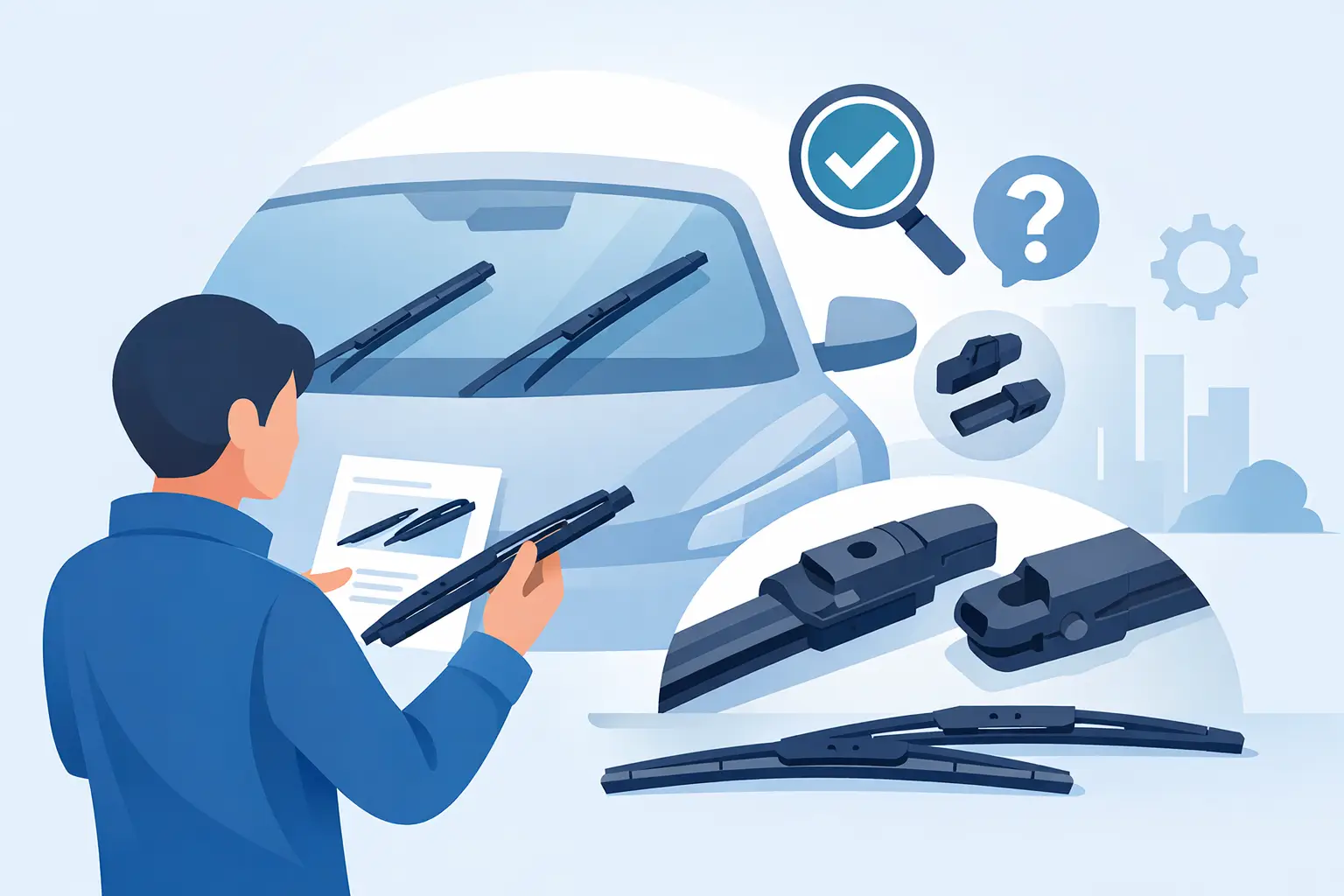
A wiper blade can look right in the box and still be wrong for your car. It might be too long and catch the windscreen trim, too short to clear enough glass, or supplied with an adaptor that will not lock onto your wiper arm. Knowing how to check wiper compatibility before you buy saves the hassle of returns and, more importantly, helps keep your view clear when the rain hits.
For most Australian drivers, the easiest answer is not measuring a blade in the driveway. It is matching replacement wipers to your exact vehicle details, then checking a few key fitment points before you place the order. No squeaks. No streaks. Just clear views.
Start with your exact make, model and year
Your vehicle make, model and year are the foundation of wiper compatibility. A Toyota Corolla, for example, has changed size, shape and wiper-arm fittings across different generations. The same goes for popular vehicles such as Mazda 3s, Ford Rangers, Hyundai i30s, Subaru Outbacks and many European imports.
Enter the vehicle exactly as it appears on its registration paperwork: make, model, model year and, where requested, the body style or series. A hatch, sedan, wagon, SUV and ute can use different front or rear blade configurations even when they share a model name.
Be especially careful when your vehicle was built near the end or beginning of a model year. Car makers sometimes change wiper arms or blade lengths during a production run. If your vehicle finder asks for a series, generation or build date, it is there for a reason. Take the extra moment to confirm it.
A vehicle-specific finder removes much of the guesswork because it matches the blades to the application rather than relying on a generic size chart. That means the blade length, curve and supplied adaptor are selected for the vehicle you actually drive.
Check front and rear wipers separately
Most vehicles use two front blades, but they are rarely identical. The driver-side blade is often longer, while the passenger-side blade is shorter to prevent the blades from clashing as they sweep. Ordering two blades of the same length just because they look similar can leave uncleaned areas or cause contact between the blades.
Rear wipers need their own check too. A rear blade may use a different attachment style from the front pair, and many cars do not have a rear wiper at all. SUVs, wagons, hatchbacks and some utes commonly do, while sedans generally do not.
If you are replacing all wipers at once, confirm that the kit includes the front pair and rear blade where applicable. If you only need the rear blade, select it specifically for your vehicle rather than assuming it uses the same fitting as the front.
Blade length matters, but it is not the whole story
Checking your existing blade length is useful as a backup. Lift each wiper arm carefully, measure the rubber blade from end to end in millimetres, and compare the result with the replacement specification. Do this for every blade, including the rear one.
But do not rely on length alone. Two 600 mm blades can have different mounting positions, spoiler designs, curves and connector types. A blade may be the correct length yet sit too high on the arm, fail to clip in securely or wipe poorly against the windscreen.
The right blade needs to do three things: attach firmly, follow the shape of the glass and sweep without hitting the windscreen edge, A-pillar trim or the other blade. Vehicle-specific kits are designed around all three, not just the number on a tape measure.
Identify your wiper arm attachment type
The connection between the wiper arm and blade is the detail most likely to cause a bad fit. Modern replacement blades often include pre-fit adaptors, but the adaptor still needs to suit the arm on your vehicle.
Common attachment types include:
- J-hook arms, which curve like a hook and are found on many older and current vehicles.
- Pinch-tab fittings, where tabs on either side of the connector release the blade.
- Top-lock fittings, which slide and click into place from above.
- Bayonet arms, which use a flat metal arm that slides into the blade connector.
- Side-pin fittings, which lock through a pin on the side of the arm.
Look at the centre of your current blade where it joins the arm. You do not need to become an expert in every fitting style, but knowing whether it is a hook, tab or flat arm can help you confirm the match. If the replacement listing is matched to your exact make, model and year, it should also state that the correct adaptor is included or pre-fitted.
Avoid forcing an adaptor onto the arm. A wiper blade that seems attached but does not click or lock properly can come loose while driving. That is the last thing you need during a heavy downpour on the M1 or a wet regional road.
Watch for model variants and imported vehicles
Australian vehicles can have more variation than expected. A facelifted model may use a new wiper-arm design. A high-spec trim can have a different windscreen shape. An imported Japanese or European vehicle may not share the same fitment as its Australian-delivered equivalent.
This does not mean finding the right blades is difficult. It simply means broad descriptions such as “2018 SUV” are not enough. Confirm the full model designation and series before buying. If you have an imported vehicle, check its build details closely and use the existing blade and arm style as an additional reference.
The same caution applies to vehicles with unusual windscreen setups, including some performance models, luxury cars and older classics. Their blades may have a distinctive curve, an integrated spoiler or a less common connection. A generic multi-fit blade can sometimes work, but a vehicle-matched option offers more confidence that it will clear the right area and sit correctly against the screen.
Do not assume universal blades are a safe shortcut
Universal blades can be tempting because they promise to suit a wide range of cars. The trade-off is that you may need to sort through several adaptors, work out which one fits and hope the blade profile suits your windscreen. That can be fine for a confident DIYer with time to spare, but it is not always the fastest or most reliable option.
A vehicle-specific kit is the simpler choice for everyday drivers. The correct front lengths are paired for your car, the attachment is selected for the arm and installation is usually a quick click-in job. That is particularly useful when your old blades are smearing in the middle of winter and you need a fix, not a fitting project.
At Auto Cross, vehicle-matched blade kits are selected through make, model and year fitment, with pre-fit adaptors designed to make replacement straightforward. It is a practical way to avoid paying more at a parts shop for a blade that still needs sorting at home.
Confirm the fit before throwing out the old blades
Once your new blades arrive, compare them with the blades currently fitted before removing anything. Check the lengths, connector position and attachment shape. The new driver and passenger blades may look different from each other, which is normal if their lengths differ.
Remove one blade at a time so you can use the other as a reference. Most arms release by lifting a small tab, sliding the old blade down or out, then clicking the new blade into place. Keep a hand on the bare wiper arm while the blade is off. If the arm snaps back against the windscreen, the metal end can crack or chip the glass.
After installation, lower the arms gently and inspect both blades where they rest. They should sit flat against the windscreen with no lifting, twisting or loose movement at the connector. Wet the windscreen with washer fluid, then run the wipers through a few cycles. Do not test new blades on a dry windscreen, as dry glass creates unnecessary friction.
Listen for chatter and look for missed sections, streaks or the blades touching each other. A new blade may leave a light film for the first few wipes if the windscreen is dirty, but repeated streaking usually points to contamination, a damaged windscreen or an incorrect fit.
A quick compatibility check before checkout
Before ordering, take 60 seconds to confirm the essentials: your exact make, model, year and series; whether you need front blades, a rear blade or both; and whether the listing clearly states it suits your vehicle. If you can, compare the stated lengths and fitting style with what is already on the car.
Clear vision is not a luxury feature. It is a basic safety requirement for school runs, late shifts, weekend trips and every wet commute in between. Choose blades matched to your vehicle, fit them carefully and let the next burst of rain be the easiest part of your drive.
Posts Widget



Copyright 2025 © AutoCross.
