
Why Do Wipers Smear in Rain? Causes and Fixes
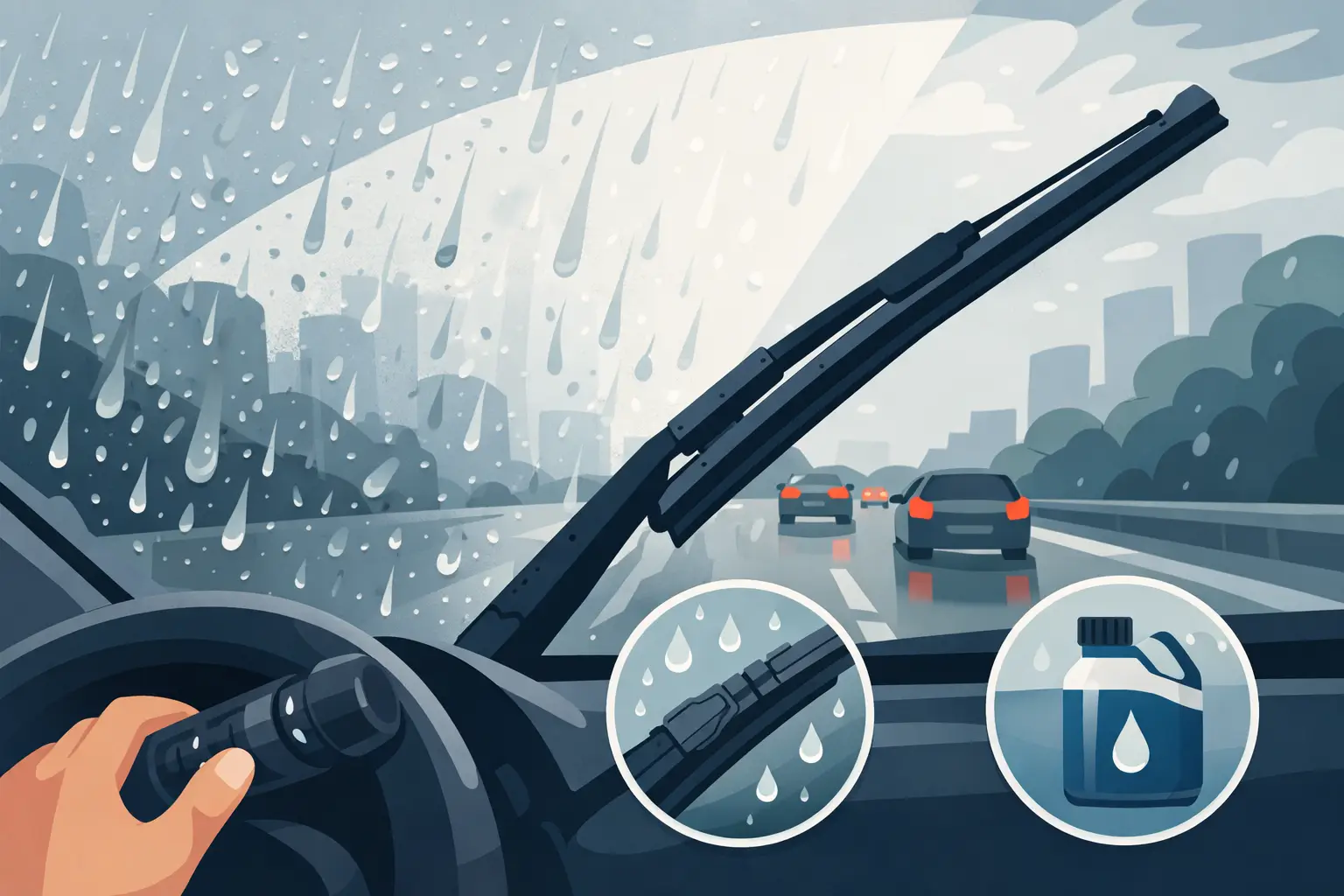
Rain hits the windscreen, you flick on the wipers, and instead of a clear view you get a hazy film dragged straight across your line of sight. Why do wipers smear in rain? Usually, it is not the rain itself. It is a build-up on the glass, worn rubber, poor blade contact, or a combination of all three.
A smeary windscreen is more than annoying when you are trying to see brake lights on a wet motorway or spot a pedestrian at a dimly lit crossing. Clear vision matters, especially in heavy rain, early mornings and those sudden showers that turn a dry road greasy in minutes. The good news is that the cause is often simple to identify – and just as simple to fix.
Why Do Wipers Smear in Rain Instead of Clearing It?
Your wiper blade needs a clean, flexible rubber edge and even pressure across the windscreen. When the blade sweeps, it should push water away in one clean pass. Anything that interrupts that contact can leave streaks, oily arcs, patches of water or a cloudy smear.
Sometimes the smear appears in both directions. Other times, the blade clears well on the upstroke but leaves a film on the way back. That pattern is useful: it can point to a dirty screen, damaged rubber or a blade that is no longer sitting correctly against the glass.
Your windscreen has road film or residue
Windscreens collect more than dust. Exhaust soot, tyre spray, tree sap, insect residue, wax from car washes and oily road grime can form a nearly invisible layer over the glass. When rain arrives, wipers spread that residue into a cloudy film.
This is especially common after a long dry spell, on busy urban roads, or when driving behind trucks and other traffic in wet weather. If your wipers look fairly new but suddenly smear, start with the glass. The problem may be on the windscreen rather than in the blades.
Clean the windscreen thoroughly with a quality automotive glass cleaner and a clean microfibre cloth. Work on the outside and inside of the glass – interior haze can make an external smear seem worse, particularly at night. Avoid using a dirty rag or household cleaners that leave their own residue behind.
The rubber edge is dirty
A wiper blade picks up grit, dust and oily grime every time it runs. That debris sits along the fine wiping edge, where it can create streaks or drag a greasy line across the screen.
Lift the wiper arms carefully and wipe the rubber edge with a damp, clean cloth. You may see dark residue transfer onto it. Repeat until the cloth comes away mostly clean, then test the wipers with washer fluid or a wet windscreen.
Cleaning can improve performance, but it is not a permanent fix for aged rubber. If the blade still smears after both the windscreen and rubber are cleaned, replacement is usually the smarter move.
The blade rubber is worn, hardened or split
Australian sun is tough on wiper blades. Heat, UV exposure, dust and long periods sitting unused can dry the rubber out. Once it hardens, the edge cannot flex smoothly over the curves of your windscreen. Instead of clearing water, it skips, chatters or leaves a broad smear.
Look closely at the rubber. Cracks, fraying, uneven edges and sections pulling away from the frame are clear signs it has reached the end of its useful life. You might also notice a permanent streak in the same spot every time the blade passes.
As a practical rule, inspect your wipers every few months and replace them when performance drops, not only when they completely fail. Many drivers need new blades about every 6 to 12 months, though it depends on where the car is parked, how often it is driven and how harsh the weather has been.
The wiper blade is not applying even pressure
Modern windscreens are curved, and the blade needs to follow that curve closely. If the blade frame has weakened, the wiper arm is bent, or the blade is the wrong shape or length for the vehicle, pressure can be uneven. You may see clear sections alongside wet patches, especially at the ends of the wipe.
A poor fit can also cause lifting at speed. If your wipers work reasonably around town but smear badly on the highway, airflow and uneven blade contact may be part of the issue. Aerodynamic, vehicle-specific blades are designed to sit firmly against the glass, helping maintain a clean wipe when conditions get rough.
Quick Checks Before You Replace Your Wipers
Before buying anything, give the windscreen and blades a proper clean. Then use washer fluid and watch the wiping pattern from the driver’s seat. A smear that improves after cleaning points to residue. A repeated streak, chattering sound or unwiped patch usually points to worn blades or fitment.
Check the washer fluid as well. Plain water is not ideal for regular use because it does little to cut through oily grime. A suitable windscreen washer additive helps remove road film and keeps the glass clearer between cleans.
It is also worth checking that the blade is properly clipped into the arm. If it has recently been changed and one side is lifting or moving loosely, stop and inspect the connection. Do not try to force the wiper arm down against the windscreen – the arm can spring back and damage the glass.
When Cleaning Will Not Fix a Smearing Wiper
Cleaning is worthwhile, but it cannot restore rubber that has lost its shape or elasticity. Replace the blades if you notice persistent smearing after cleaning, squeaking or chatter, visible cracks, split rubber, loose fittings, or sections that fail to clear water.
Do not wait for a storm to make the call. A blade that leaves only a minor streak in light rain can become a serious visibility issue in a downpour. For commuters, families, rideshare drivers and regional motorists, this is one small maintenance job that pays back immediately every time the weather turns.
The right replacement matters as much as the replacement itself. Generic blades may look close enough on the shelf, but wiper lengths, attachment styles, curvature and rear-wiper designs vary widely between cars, SUVs and utes. A blade that does not match your vehicle can leave missed areas, make noise or sit poorly against the screen.
Vehicle-specific wiper kits remove that guesswork. At Auto Cross, blades are matched to your make, model and year, with pre-fit adaptors designed for a straightforward at-home change. No squeaks. No streaks. Just clear views – provided the windscreen is clean and the wiper arms themselves are in sound condition.
How to Keep Wipers Clearer for Longer
Parking under cover where possible reduces UV damage, though that is not always realistic in an Australian summer. More achievable habits are cleaning the windscreen regularly, wiping the blade edge when you wash the car, and never running dry wipers over a dusty screen.
Use washer fluid before wiping off dirt, pollen or salt spray. Dry wiping creates friction and can nick the rubber edge. If the windscreen is covered in heavy dirt or mud, rinse it first rather than asking the wipers to do all the work.
Take a moment to clear leaves, twigs and built-up debris from the area at the base of the windscreen too. Rubbish trapped near the wiper arms can transfer onto the glass or interfere with smooth blade movement.
Clear Vision Starts With a Clean Sweep
A smeary wiper is often your car telling you that the glass needs cleaning, the blade needs attention, or both. Start with the simple checks, but trust what you can see from behind the wheel. If rain is still being dragged into streaks after a thorough clean, fresh, correctly fitted blades are a small change that can make every wet-weather drive feel safer and easier.
Posts Widget



Copyright 2026 © AutoCross. | Sitemap
