
Choosing Wipers for Sedans Without Guesswork
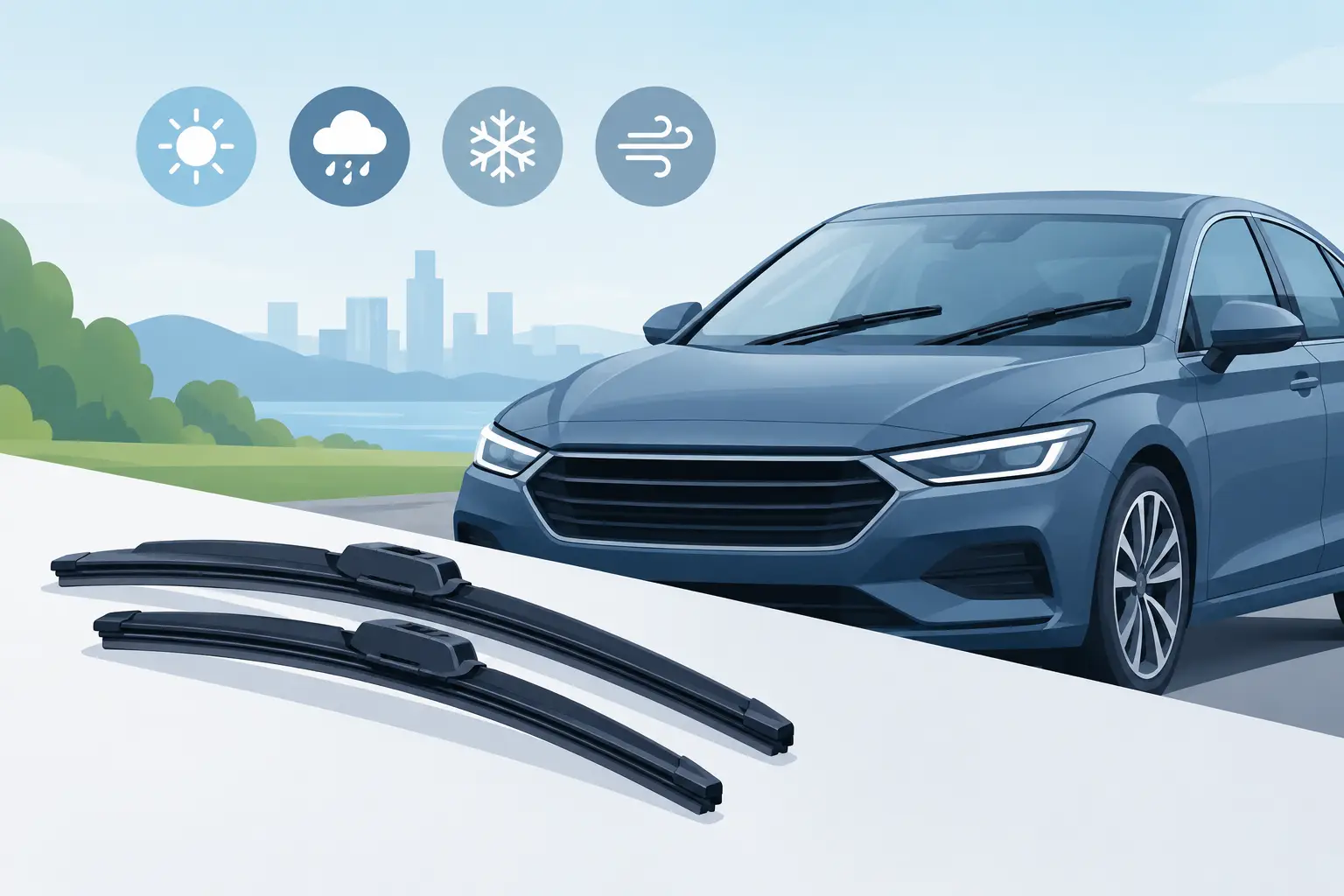
A sedan’s windscreen can look spotless until the first proper downpour exposes tired wipers. One blade leaves a hazy strip in your line of sight, the other chatters across the glass, and suddenly a quick school run or commute feels needlessly hard work. Choosing wipers for sedans is not about grabbing the closest pair off a shelf. It is about getting the right fit, dependable rubber and clean wiping when Australian weather turns.
The good news? You do not need to be a mechanic to replace them. With vehicle-specific blades and pre-fit adaptors, most sedan owners can swap a worn set at home in well under a minute. No squeaks. No streaks. Just clear views.
Choosing wipers for sedans starts with fitment
Wiper blades are not one-size-fits-all. Even sedans from the same manufacturer can use different blade lengths, arm connections and rear-blade designs across model years and trim levels. A blade that is only slightly too long can catch the windscreen edge or overlap its partner. Too short, and it leaves rain sitting where you need to see.
Start with your vehicle’s make, model and year. This is more reliable than measuring an old blade alone, particularly if a previous owner fitted an incorrect replacement. A vehicle finder removes the compatibility guesswork by matching the blades and adaptors to your sedan’s specific wiper arms.
Check whether your car needs front blades only or a front-and-rear set. Most traditional sedans have front wipers only, but sedan-based hatchbacks, liftbacks and some European models may have a rear window wiper. Ordering the right kit means no surprise when you open the parcel.
The connection point matters as much as the blade length. Hook-style arms remain common, while some newer sedans use push-button, pinch-tab or side-lock fittings. Pre-fit adaptors make the job far easier, but only when they are selected for your vehicle. Perfect fit, guaranteed, beats trying to force a generic adaptor into place.
Know when your sedan needs new blades
Do not wait for a torrential storm to test your wipers. Run them with washer fluid on a dry, bright day and watch how they clear the glass. A good blade should leave an even, clear sweep with no smears, skips or missed edges.
Streaking is the most obvious warning sign. It often means the rubber edge has hardened, split or picked up grime that cleaning cannot remove. Chattering or juddering can happen when the blade no longer sits evenly against the windscreen. A squeak may seem minor, but it is often the sound of inconsistent contact across the glass.
Other signs include a blurred film after each pass, lifting at the ends of the blade, cracked rubber and a blade that leaves a thin line directly in front of the driver. Heat, UV exposure, dust, salt air and sudden temperature changes all wear rubber down. Australian conditions can be tough on wipers, especially for cars parked outside.
As a practical rule, inspect your wipers every few months and replace them when performance drops. Many drivers change blades around every six to 12 months, although this depends on where the car lives and how often it is driven. A garaged city sedan may get longer from a set than a car that spends its days in a hot regional car park.
Choose the blade design that suits daily driving
For most modern sedans, beam-style blades are a strong choice. They use a curved, aerodynamic frame rather than a traditional exposed metal structure. That shape helps apply even pressure across the windscreen, reducing skips and improving wiping in steady rain or at highway speeds.
Conventional framed blades can still work well on older sedans designed for them. Their metal or plastic frame uses several pressure points to hold the rubber against the glass. The trade-off is that exposed sections can collect dirt and may perform less consistently in harsh weather than a streamlined beam blade.
Hybrid blades sit between the two. They combine a supported frame with a smoother outer cover, offering solid pressure and a more aerodynamic profile. The best option depends on your sedan’s factory design and fitment. Rather than choosing by appearance alone, choose the blade made to suit your car.
A quality blade should also have durable, flexible rubber. Premium rubber compounds stay supple longer, helping the wiping edge follow the windscreen’s curve. That matters on sedans with deeply curved glass, where poor-quality blades can lose contact at the outer edges.
Do not overlook blade length and windscreen shape
Your sedan may use two different front blade lengths. This is normal. The driver’s blade is often longer to clear more of the primary viewing area, while the passenger blade is shorter to avoid clashing with it. Buying two matching-length generic blades can reduce coverage or create interference.
Windscreens also vary more than they appear to. A compact sedan, a large family sedan and a luxury European model can all have very different curves and sweep patterns. Vehicle-specific wipers are shaped and supplied to work with those differences, so the blade applies pressure where it should.
This is why a cheap universal pack can become false economy. It may technically attach to the arm, yet still wipe poorly, sit awkwardly or wear out faster. Saving a few dollars is not much help if you are squinting through a smear on a wet night.
Make your wipers last longer
New blades work best on clean glass. Before fitting them, wash the windscreen and remove traffic film, dust, tree sap and insect residue. A dirty screen drags on the rubber edge and can make even new wipers chatter.
Use proper windscreen washer fluid rather than relying on water alone. Washer fluid helps lift grime and oily road film, while plain water may struggle with stubborn residue. Keep the washer bottle topped up, particularly before a long drive or holiday trip.
Avoid running the wipers over a dry, dusty windscreen. If the glass is covered in dust or pollen, use the washers first. In summer, lift leaves and debris away from the base of the windscreen before switching the wipers on. Small bits of grit can nick the rubber and scratch glass.
If your sedan is parked outdoors for long periods, regular checks are worthwhile. UV exposure can harden the blade edge quickly. There is no need to lift the wipers every day, but do not leave them stuck to a frosty or heavily soiled windscreen. Free the blade gently and clean the glass before use.
Installation should be quick, not complicated
Once you have the correct kit, fitting new front blades is usually straightforward. Lift the wiper arm carefully away from the windscreen, release the old blade from its connector, click the new blade into place and lower the arm gently. Never let a bare metal wiper arm snap back onto the glass – it can crack or chip the windscreen.
Give each blade a light tug after fitting to make sure it is locked in. Then test the washers and wipers before heading out. The first few passes may show a little moisture from cleaning, but the sweep should quickly become smooth and even.
Auto Cross makes this small maintenance job simpler by matching premium OEM-grade wiper kits to your make, model and year, with pre-fit adaptors and fitment support. That means less time comparing clips and more confidence that your sedan is ready for the next rain front.
Clear vision is not an optional extra. When rain hits, a correctly fitted set of quiet, streak-free wipers gives you one less thing to think about and a better view of every kilometre ahead.
Posts Widget



Copyright 2026 © AutoCross. | Sitemap
