
Are Beam Wipers Worthwhile for Australian Drivers?
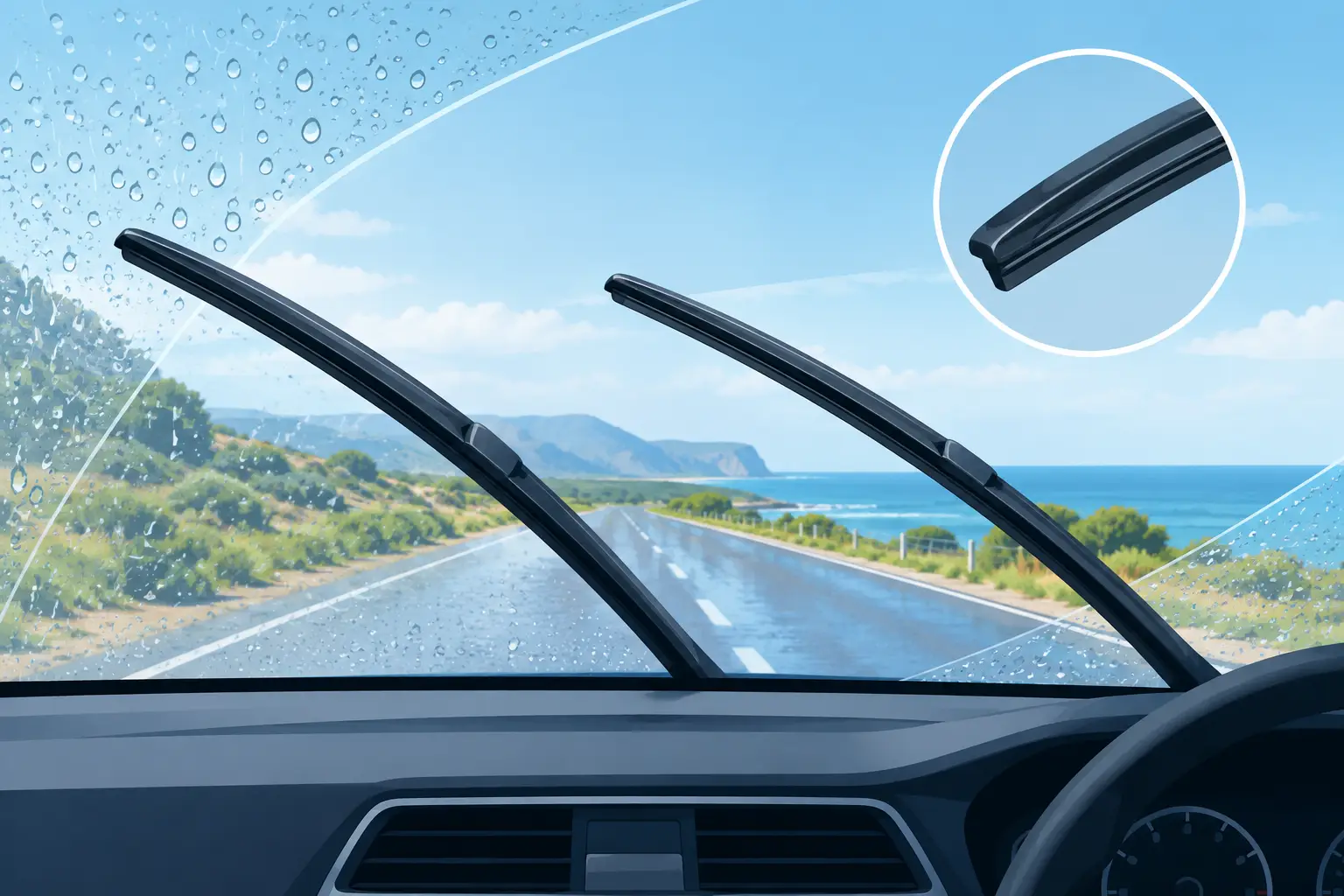
That sudden Queensland downpour, a wet freeway at night, or dusty spray on a regional road is a bad time to find out your wipers are past it. So, are beam wipers worthwhile? For most Australian drivers, yes – provided you choose a quality, vehicle-specific set that properly suits your windscreen and wiper arms.
Beam blades are designed to give you more even contact, quieter wiping and clearer vision in rough weather. They are not a miracle fix for every windscreen problem, and the cheapest universal options can create their own headaches. But compared with older-style conventional blades, a well-made beam wiper is usually a smart upgrade for daily driving.
What makes a beam wiper different?
Traditional wiper blades use a metal frame with several pressure points. That frame presses the rubber refill against the windscreen. It is a familiar design, and it can work well, particularly on older vehicles.
A beam wiper has a slimmer, frameless profile. Inside the blade is a flexible spring-steel strip that follows the curve of the glass. Instead of applying pressure in a few spots, it spreads pressure along more of the wiping edge.
The practical result is simple: more consistent contact can mean fewer streaks, less chatter and a cleaner sweep across the screen. The enclosed design also gives dust, grit and road grime fewer places to build up than an exposed metal frame.
For drivers who deal with regular rain, early-morning dew, bugs, coastal salt air or long country kilometres, that consistency matters. Your wipers may be a small part of the car, but they are directly tied to what you can see.
Are beam wipers worthwhile in Australian conditions?
Australian weather gives wiper rubber a real workout. Strong UV, hot winds, summer storms and cold, wet mornings all age a blade differently. Rubber can harden, split or lose its smooth edge, leaving smears right where you need a clear view.
Quality beam wipers are worthwhile because their aerodynamic shape helps keep the blade planted against the windscreen at speed. That is especially useful on motorway runs, open-road driving and exposed stretches where a conventional blade can start to lift or skip.
Their low-profile construction can also reduce wind noise. If you have ever heard a worn blade dragging across a mostly dry windscreen or lifting in heavy rain, you will appreciate the difference a good set can make. No squeaks. No streaks. Just clear views.
That said, beam blades are not automatically better simply because they are frameless. The rubber compound, internal tension, blade shape and adaptor all matter. A poorly made beam blade can still chatter, miss the corners or detach from the arm. Fitment is every bit as important as the blade style.
The benefits you will notice day to day
The biggest benefit is more dependable visibility. A beam blade that sits evenly against the glass is less likely to leave the annoying unwiped lines that catch the glare from headlights and streetlights.
Many drivers also notice a smoother, quieter action. This is not only about comfort. Chatter and skipping often mean the blade is not maintaining proper contact, which can leave water behind just as traffic conditions become harder to read.
Beam blades also look tidier. Their streamlined design suits the curved windscreens found on many modern cars, SUVs and utes. That is a bonus, but performance should be the deciding factor.
Durability is another reason to consider them. Premium rubber and a protected blade structure can stand up better to regular use than a basic, exposed framed design. Still, no blade lasts forever under Australian sun. Expect to inspect your wipers regularly and replace them when performance drops, rather than waiting for total failure.
When conventional wipers may still make sense
Beam wipers are a strong all-round choice, but they are not the only worthwhile option. Some older vehicles were designed around conventional framed blades, and a quality vehicle-specific conventional set may suit them perfectly.
Budget can also be a factor. If you are selling a car soon or need a low-cost replacement for a rarely driven second vehicle, conventional blades can do the job. The key is avoiding a generic blade that is the wrong length, uses a loose adaptor or does not match the windscreen’s curve.
There are also hybrid blades, which combine a conventional frame with an aerodynamic outer shell. They can be a good middle ground on vehicles originally fitted with that style. The best choice is not about chasing the newest design. It is about getting the correct blade for your vehicle and the conditions it sees.
The fitment trap: why “close enough” is not enough
Wipers look simple, which is why many people grab a universal pair from a shelf and hope for the best. The problem is that wiper systems vary more than you might expect. Front blades can be different lengths, arm connections differ between makes and models, and rear wipers are especially vehicle-specific.
A blade that is too long may hit the windscreen trim or overlap badly with the other blade. One that is too short leaves unnecessary blind spots. An adaptor that does not lock in securely can rattle, sit at the wrong angle or come loose.
This is where a make, model and year finder saves time. It takes the guesswork out of blade length and connector type, so you can order a matched kit with pre-fit adaptors instead of standing in a car park comparing packages. Perfect fit, guaranteed, is more than a nice line when visibility is on the line.
Signs it is time to replace your wipers
Do not wait until the next big storm to check them. Your blades are likely due for replacement if they leave streaks or hazy patches, chatter across the screen, skip during the sweep, squeal, or leave thin unwiped lines in the driver’s view.
Look closely at the rubber too. Cracks, splits, frayed edges and sections that have pulled away from the blade are clear signs that the wiping edge is no longer doing its job. If the windscreen stays smeary even after cleaning it, the blade may be worn or contaminated with oil and road film.
As a rule, inspect wipers every few months and plan to replace them about every six to 12 months, depending on use and exposure. A car parked outside in full sun may need new blades sooner than one kept under cover. Rideshare drivers and high-kilometre commuters may also wear through blades faster.
How to get the best from beam wiper blades
Good wipers need a clean surface to work on. Before fitting a new pair, clean the windscreen thoroughly to remove traffic film, wax residue, bugs and grit. Wipe the wiper arms as well, as dirt around the hinge or mounting point can affect movement.
Avoid running the wipers over a dry, dusty screen. Use washer fluid first where possible. Dry wiping drags grit across the rubber and glass, shortening blade life and potentially marking the windscreen.
Use proper washer fluid rather than relying only on plain water. It helps cut through grime and can leave less residue behind. In frosty conditions, make sure the blades are not stuck to the glass before switching them on. Forcing them free can damage the rubber edge or strain the wiper motor.
Installation should be quick when the blades are matched to the vehicle. Lift the wiper arm carefully, remove the old blade, click the correct replacement into place and test it with washer fluid. Never let a bare wiper arm snap back onto the windscreen – the metal end can crack the glass.
The value comes down to quality and fit
Are beam wipers worthwhile if your current blades still wipe cleanly and quietly? Probably not yet. There is no need to replace parts that are working properly. But once you see streaking, skipping or poor clearing in rain, upgrading to quality beam blades is one of the easiest ways to improve everyday driving safety.
The extra cost over a basic generic blade is usually modest, while the benefit is felt every time the weather turns. A correctly matched beam set gives you a cleaner wipe, stable high-speed performance and the confidence that comes from seeing more clearly when conditions are at their worst.
For a fast, fuss-free replacement, Auto Cross matches premium wiper kits to your make, model and year, so you can fit a fresh set at home and get back to clearer driving. Your next wet commute should test the weather, not your vision.
Posts Widget



Copyright 2025 © AutoCross.
