
Wiper Blade Lengths: Find Your Perfect Fit
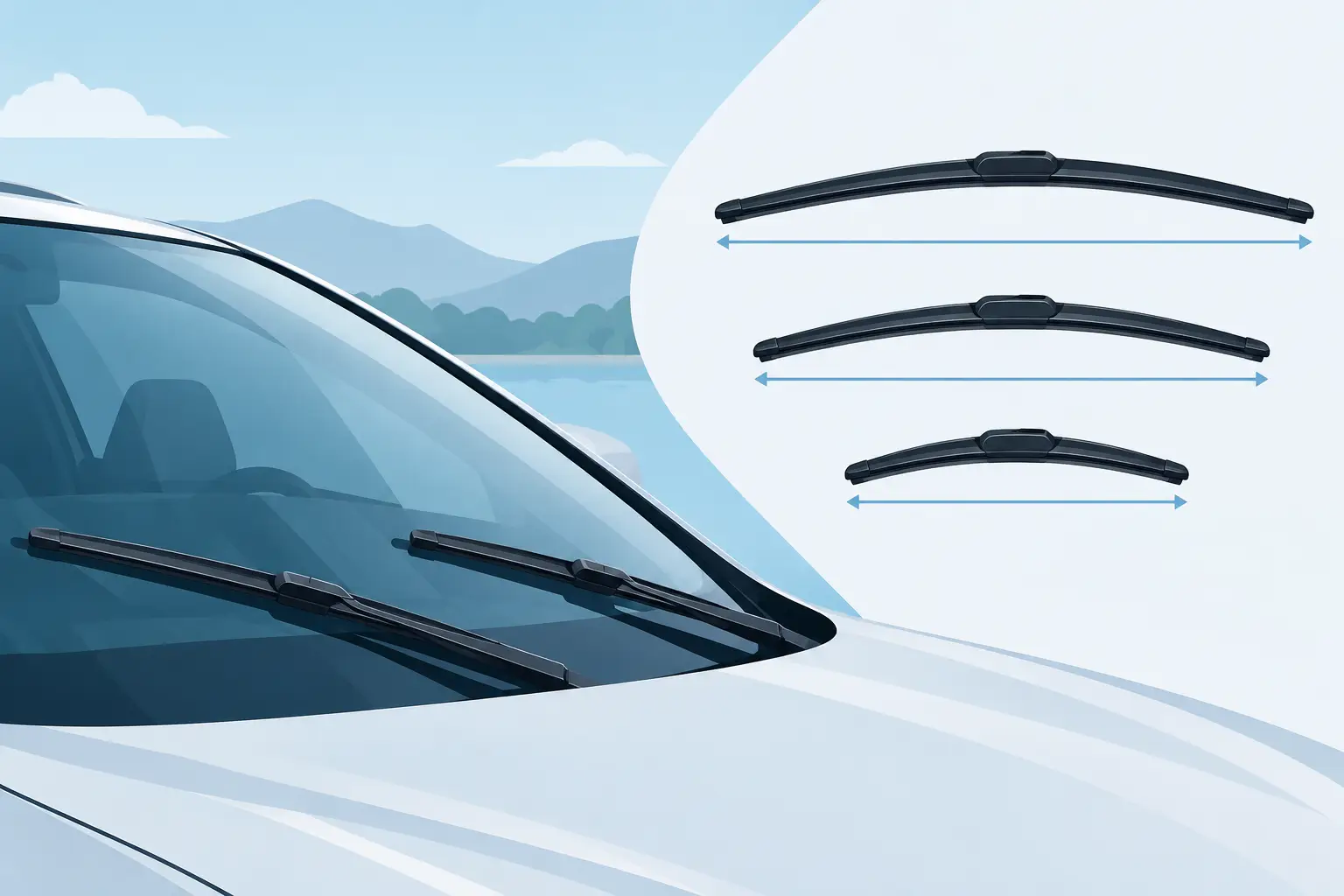
A wiper blade that is only a few centimetres too long can hit the windscreen trim, lift at speed or clash with the other blade. Too short, and it leaves part of your view in the rain. That is why getting wiper blade lengths right matters more than simply choosing the closest-looking pair from a shelf.
For most Australian drivers, replacing wipers should be quick and affordable. The tricky part is that there is no universal size. Your vehicle’s make, model, year, body style and wiper-arm fitting all play a part. Get the right match and you get clean, quiet clearing when a downpour hits. No squeaks. No streaks. Just clear views.
Why wiper blade lengths are not one-size-fits-all
Front wipers are designed around the shape of a specific windscreen. A small hatchback, family SUV, ute and European sedan can all use completely different blade combinations, even when the windscreens look similar at first glance.
It is also common for the driver’s side and passenger side blades to be different lengths. The driver’s blade is often longer to clear a wider area directly ahead, while the passenger blade is sized to work around the windscreen curve and avoid contact with the other arm. Fitting two identical blades because they came in a generic pack can reduce the clearing area or cause the blades to knock together.
Rear wipers are separate again. They are usually shorter and often need a different connection type. A rear blade might look simple, but a poorly matched one can sit at the wrong angle, skip across the glass or fail to lock onto the arm properly.
The correct length is not just about coverage. It is also about blade pressure, sweep pattern and clearance. Vehicle-specific wiper kits take those details out of your hands, so you are not left guessing in the car park while rain clouds roll in.
How to find the correct wiper blade lengths
The most reliable approach is to select your exact vehicle by make, model and year. This is better than choosing based on appearance, relying on a mate’s recommendation or assuming similar models use the same parts.
A model name alone is not always enough. Manufacturers can change wiper arms, windscreen designs and blade sizes between generations, facelifts and body styles. For example, a wagon may not share the same rear blade as the sedan version, and a newer model can use a different adaptor from an earlier one.
If you use a vehicle finder, check that you have chosen the right year and variant before adding anything to your cart. Take an extra moment if your vehicle is imported, recently updated, has an unusual badge, or you are unsure whether it is a hatch, wagon, SUV or ute. A few seconds of checking beats waiting for a replacement that does not fit.
At Auto Cross, vehicle-specific kits are matched to the make, model and year selected, with pre-fit adaptors designed to make the swap straightforward. That means you can order with confidence rather than trying to decode measurements and fittings yourself.
Measuring your existing blades as a backup
Measuring your old blades can help as a cross-check, particularly if you cannot identify the current size. Lift each wiper arm carefully away from the glass, then measure the rubber blade or its frame end to end. Measure the front left, front right and rear blade separately.
Still, use that number with caution. The blades currently on your car may already be the wrong size, especially if a previous owner fitted a generic replacement. A worn or bent blade can also make the measurement less accurate. Measurement confirms what is there, but a vehicle-specific fitment match confirms what should be there.
Do not measure the wiper arm itself. The arm length and blade length are different, and choosing a blade based on the arm can leave you with the wrong result.
What happens when the blade size is wrong?
The most obvious problem is poor visibility. A short blade leaves wider uncleared bands at the edges of the windscreen, where rain, road spray and grime can build up. That is frustrating on a normal commute and a genuine safety issue on dark, wet roads.
Oversized blades create a different set of problems. They can overlap, catch on the windscreen surround or push against the edge of the glass at the end of the sweep. This may cause chattering, missed patches and premature wear. In some cases, the extra length puts strain on the wiper motor and linkage.
Even a blade that technically fits can perform badly if the adaptor is wrong. It may not sit securely on the arm, apply even pressure, or follow the curve of the windscreen. That is why length, blade design and attachment type need to work together.
Length is only part of a good wiper replacement
Correct sizing gives the blade room to sweep properly, but the blade itself still needs to handle real conditions. Australian weather can be hard on rubber. Summer heat, harsh UV, dust, salt air and sudden heavy rain all contribute to cracking, hardening and loss of flexibility.
A quality blade uses durable rubber that stays in contact with the glass and an aerodynamic profile that helps reduce lift at highway speeds. The result should be a smooth, even wipe rather than a noisy scrape or a smear that catches the sun at the worst possible time.
Look for a replacement that offers a secure, vehicle-matched fitting and consistent pressure across the windscreen. Cheap universal blades can seem like a bargain, but the saving disappears if they chatter from day one, fail to cover the right area or need replacing again after a short time.
Signs your wipers need replacing
You do not need to wait until a storm to discover that your blades are past their best. Turn the washers on and watch the sweep across a clean windscreen. If they leave lines, smear water, judder, squeak or miss sections of glass, it is time to act.
Physical wear is another clear sign. Check for split rubber, rough edges, loose sections or blades that have started to curve away from the glass. If the wipe is clean in the middle but poor at the ends, the rubber may have hardened or the blade may no longer be applying pressure evenly.
As a general rule, inspect your wipers every few months and expect to replace them around every 6 to 12 months, depending on how often the car is driven and where it is parked. Vehicles exposed to full sun, regional dust or coastal salt may need attention sooner.
A quick way to install the right blades
Once you have the correct blades, installation should not feel like a workshop job. Start with the ignition off and place a towel on the windscreen in case an arm slips back. Lift one arm at a time, release the old blade from its connector and attach the new blade until it clicks securely into place.
Lower the arm gently. Never let a bare metal wiper arm snap back onto the glass, as it can crack or chip the windscreen. Repeat on the other side, then run the washers and test the sweep before driving away.
If your replacement kit comes with pre-fit adaptors, avoid forcing a different connector into place just because it almost fits. The correct adaptor should lock on cleanly. A secure fit is what keeps the blade stable through rain, wind and everyday use.
Clear vision starts before the rain
The right wiper blade length is a small detail with a big job. It keeps your view clear when traffic throws up spray, when a summer storm hits without warning, and when an early-morning windscreen is covered in grime. Choose the exact fit for your vehicle, replace tired rubber before it fails, and give yourself one less thing to worry about when the weather turns.
Posts Widget



Copyright 2026 © AutoCross. | Sitemap
