
Choose a Front and Rear Wiper Blade Kit
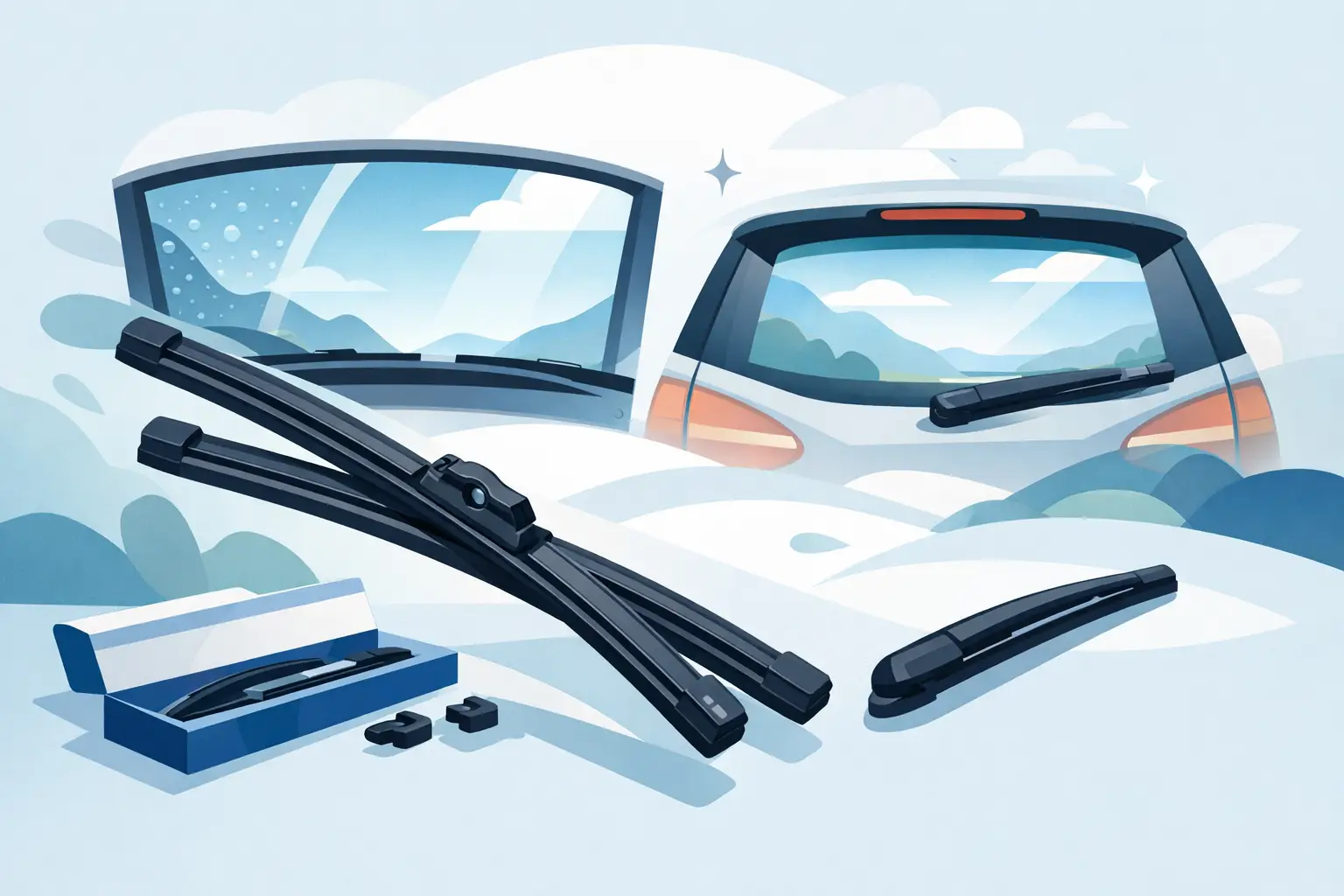
Your wipers rarely fail at a convenient time. It is usually when a summer storm hits the motorway, a dusty regional road turns to mud, or the school run starts in steady rain. A quality front and rear wiper blade kit replaces the blades you rely on most, so you can clear the windscreen and rear glass properly instead of driving through streaks, smears and glare.
For most drivers, this is one of the simplest maintenance jobs on the car. The key is not knowing every wiper style on the market. It is choosing blades matched to your make, model and year, then fitting them before worn rubber turns a wet-weather drive into a visibility problem.
Why replace the front and rear blades together?
The front wipers do the hard yards, which is why they often get attention first. They clear rain, bugs, salt spray, dust and road grime from the glass directly in your line of sight. But the rear blade matters too, particularly on hatchbacks, wagons, SUVs and many utes, where the back window can quickly collect spray and dust.
Replacing both ends together gives you a more consistent result. You are not left with a clear windscreen but a rear window that smears every time you reverse or check traffic behind you. It also makes sense from a maintenance point of view: if the front blades have been exposed to a year of sun and rain, the rear blade has usually been dealing with the same conditions.
There are exceptions. A rear blade that is still supple, quiet and clearing cleanly may not need changing at the exact same time as the fronts. However, when you are already ordering vehicle-specific replacements, a complete kit is often the easy, value-focused choice. One order, the right blades for the job, and no second round of searching a few months later.
Signs your wipers are due for replacement
Wiper blades wear gradually, so it is easy to put up with poor performance longer than you should. A quick check during your next wash can tell you plenty. Run the wipers with washer fluid and watch how they move across the glass.
If they leave lines of water behind, chatter across the windscreen, squeak, skip, or create a hazy smear, the rubber edge may be worn, hardened or contaminated. Splits and loose sections of rubber are a clear sign the blade needs replacing. A blade that lifts away from the glass at speed can also leave large unwiped patches just when rain is heaviest.
Australian conditions can shorten blade life. Strong UV, high heat, coastal salt, dry dust and sudden downpours all take a toll on rubber. As a practical rule, inspect your wipers every few months and expect to replace them around every 6 to 12 months, depending on where and how often you drive. If visibility is compromised, do not wait for a calendar reminder.
What a front and rear wiper blade kit should include
A proper front and rear wiper blade kit is built around fitment, not guesswork. It should include the two front blades in the correct lengths and a rear blade designed for your vehicle’s rear arm. This matters because rear connections are often different from front wiper connections, and even vehicles that look similar can use different blade lengths or adaptors.
The best kits use pre-fit adaptors suited to the vehicle. That removes the usual frustration of sorting through a bag of plastic clips and hoping one works. Select your make, model and year, and the blades should arrive ready to attach to the existing wiper arms.
Blade design matters as well. Premium OEM-grade rubber is made to keep a clean, even contact edge against the glass. An aerodynamic profile helps the blade stay planted at road speed, while a well-made frame or beam construction supports smooth, quiet movement. The result is simple: no squeaks, no streaks, just clear views.
Do not assume every universal blade will deliver the same outcome. Universal options can be tempting when they are on a shelf nearby, but the trade-off is compatibility. You may need to match lengths yourself, work through adaptors, or find the blade sits awkwardly on the arm. A vehicle-specific kit is designed to take that uncertainty out of the purchase.
Fitment comes before everything else
A wiper blade that is premium quality but the wrong size is still the wrong blade. Too long, and it may hit the windscreen trim, overlap another blade or foul on the edge of the glass. Too short, and it leaves unnecessary areas uncleared. The wrong adaptor can mean it will not lock on securely at all.
That is why make, model and year selection is the starting point. Be precise, especially if your vehicle has a facelift, a different body style, or was sold across several years with more than one wiper setup. If you are unsure of the exact model year, check your registration details or vehicle documentation before ordering.
Fitment is particularly valuable for imported vehicles and less common variants. Rather than measuring blades in the driveway and trying to identify an arm connection, you can start with the vehicle details and buy with confidence. Perfect fit, guaranteed, is more useful than a bargain blade that creates another errand.
Fitting your new blades at home
Changing wiper blades does not need a workshop booking. In most cases, it takes less than 30 seconds per blade once you know the release point. Lift the wiper arm gently away from the glass, press or slide the release mechanism on the old blade, remove it, then click the new blade into place until it is secure.
Before lifting the arm, place a folded towel on the windscreen beneath it. This protects the glass if the spring-loaded arm slips from your hand. Never let a bare metal wiper arm snap back onto the windscreen.
The rear blade may use a different release style, so take a moment to look at the connection before forcing anything. It should come off cleanly when released correctly. Once each blade is fitted, lower the arms carefully and test them with washer fluid. Check that the front blades sweep without touching each other or the trim, and that the rear blade clears its full intended section of glass.
If the new blades leave a light smear on the first pass, clean the windscreen and rear glass thoroughly. Old wax, road film and greasy residue can affect even a new blade. Use proper washer fluid rather than relying on dry wiping, which wears the rubber faster and can drag grit across the glass.
Make your new blades last longer
Wiper blades are a wear item, but a few habits can help them perform well for longer. Keep your windscreen washer reservoir topped up, clean the glass regularly, and wipe loose dirt from the rubber edge with a damp cloth. This is especially useful after dusty drives or when the car has been parked under trees.
Avoid using the wipers to shift thick mud, frost or heavy leaf build-up. Clear the worst of it by hand first. In very hot weather, parking under cover where possible reduces the UV exposure that dries and cracks rubber over time.
It also pays to pay attention to washer jets. If they are blocked or spraying poorly, the blades have to work across a dry patch of glass. A quick clean and correctly aimed spray can make every wipe more effective.
Clear vision is a small upgrade with a real payoff
A front and rear wiper blade kit is not a flashy car upgrade, but it is one you notice straight away. Clearer glass makes night driving less tiring, improves your view in heavy rain and helps you see pedestrians, cyclists and traffic sooner. For families, commuters, rideshare drivers and regional motorists, that is practical value every time the weather turns.
Auto Cross makes the choice straightforward with vehicle-matched blades, pre-fit adaptors and dependable performance built for Australian conditions. Choose the right kit before your current wipers give up in the rain, fit it at home, and enjoy the quiet confidence of a clean, clear view on the road.
Posts Widget



Copyright 2026 © AutoCross. | Sitemap
