
Beam Versus Conventional Wipers: Which Wins?
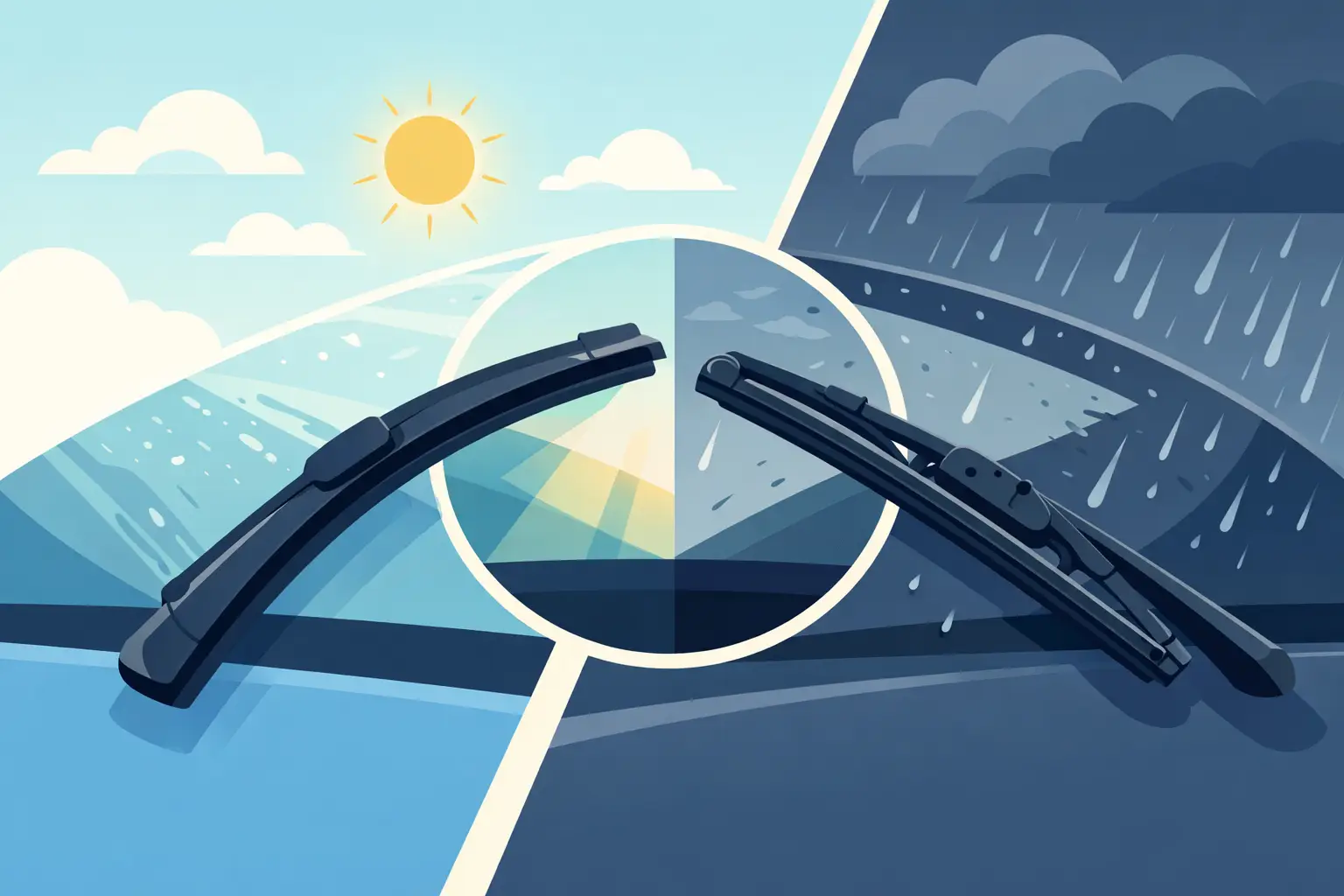
A sudden downpour on the M1 is a poor time to find out your wipers are leaving a smeary strip across the driver’s side. When weighing up beam versus conventional wipers, the right choice comes down to your vehicle, the conditions you drive in and whether you want a simple, dependable upgrade. Both designs can clear a windscreen well when they fit correctly and are in good condition. The difference is how they apply pressure to the glass.
For most modern cars, SUVs and utes, beam blades offer the quieter, cleaner all-weather performance drivers expect. Conventional blades still have a place, especially on older vehicles designed for them. The key is not buying the most complicated-looking blade – it is choosing a vehicle-specific kit that makes full contact with your windscreen.
What are conventional wipers?
Conventional wipers are the familiar framed style seen on many vehicles from the 1980s through to the early 2000s. A metal or plastic frame holds several small pivot points, which use spring tension to press the rubber refill against the windscreen. You can usually see the frame’s exposed arms and joints from outside the car.
Their biggest advantage is straightforward design. They are widely used, generally affordable and can work very well on windscreens with a relatively simple curve. If your vehicle came with conventional blades, replacing them with a quality matched set is often the safest way to keep the original wiping pattern and arm clearance.
The trade-off is exposure. Dirt, dust, salt spray and road grime can build up around the frame and joints. Over time, this may stop the blade applying even pressure across the glass. That is when you start hearing chatter, seeing unwiped patches or noticing water dragged back into your view.
What are beam wipers?
Beam wipers have a slim, enclosed one-piece design instead of an external frame. Inside the blade is a flexible tension strip that follows the shape of the windscreen. The rubber edge is pressed more evenly along the blade’s length, helping it wipe consistently across modern curved glass.
Because the structure is enclosed, there are fewer exposed areas for grime to interfere with. The low-profile shape also helps reduce wind lift at highway speeds. That matters when heavy rain hits at 100 km/h and every pass needs to clear cleanly, not skip at the outer edge.
Beam blades are common factory equipment on newer passenger cars and are a popular upgrade where compatible. They look neater too, but appearance is secondary. The real benefit is steady contact, smooth operation and clearer vision through varied weather.
Beam versus conventional wipers in Australian conditions
Australia asks a lot of a wiper blade. One week can bring dry dust, intense UV and a trip through a car wash; the next can bring a tropical downpour, coastal salt air or icy morning rain in the high country. Rubber naturally wears under sun and heat, while dust can scratch or contaminate the wiping edge.
A beam blade’s enclosed construction gives it an advantage in these conditions. Without multiple open frame joints, there is less opportunity for debris to affect how the blade flexes. Its aerodynamic profile can also help it stay settled against the glass on faster roads, which is useful for regular motorway and regional driving.
Conventional blades are not automatically poor performers in the heat or rain. A premium conventional blade with quality rubber and the right pressure points can provide excellent clearing. But once its frame begins to bind or lose even tension, performance can drop quickly. For drivers who clock up plenty of kilometres, park outdoors or face frequent wet-weather driving, beam blades are often worth the extra spend where the vehicle supports them.
The biggest factor is fitment, not blade style
The best beam blade will not perform properly if it is the wrong length, has an unsuitable adaptor or is not designed for your windscreen curve. The same goes for a conventional blade. Generic blades can look close enough on the shelf but still leave an annoying missed corner, foul against the other blade or fail to lock securely onto the wiper arm.
Vehicle-specific fitment removes the guesswork. Your make, model and year determine the required blade lengths, arm connection and, in some cases, whether the left and right blades use different fittings. Rear wipers are even more particular, as the blade and arm often use a dedicated connection.
This is also why changing from conventional to beam is not always the right move. Some older cars have arm geometry and windscreen shapes that perform best with the factory-style framed design. Other vehicles are designed around beam blades and can lose wiping quality with a basic conventional replacement. Match the blade to the car first, then compare quality and price.
When beam wipers are the better choice
Beam blades are usually the strong option if your vehicle was fitted with them from new, has a deeply curved windscreen or spends a lot of time on the road in rain. They suit commuters who need quiet operation in stop-start traffic, rideshare drivers who cannot afford a blurred windscreen between jobs, and families doing long holiday runs when weather can change quickly.
They are also a sensible pick if your current blades lift, chatter or leave streaks despite a clean windscreen. Those symptoms can come from worn rubber, but uneven frame pressure can be part of the problem too. A correctly fitted beam kit provides consistent contact and a cleaner sweep without the clunky appearance of exposed frame arms.
Quality matters here. Look for durable rubber, a low-profile aerodynamic design and pre-fit adaptors made for your wiper arms. A blade that installs easily and locks firmly is more useful than one with a long list of vague features.
When conventional wipers make more sense
Conventional blades remain a practical choice for many older cars, classic vehicles and models specified with framed blades. Their multi-point structure can suit a flatter windscreen, and they are often the correct replacement design for the vehicle. There is no need to force an upgrade simply because beam blades are newer.
They can also be good value for drivers who want reliable everyday visibility without paying for a design their vehicle does not require. The important part is choosing a quality blade with a durable wiping edge, rather than the cheapest universal option. A poor-quality blade can squeak and smear from day one, regardless of its style.
If you choose conventional blades, clean the frame area occasionally and inspect it for bent sections or seized pivots. A damaged frame will not distribute pressure properly, even if the rubber edge still looks acceptable.
Signs it is time to replace your wipers
Do not wait until the next storm to act. Replace wipers when they leave streaks after the windscreen has been cleaned, chatter across wet glass, skip sections of the sweep or leave a hazy film in front of your eyes. Split rubber, rounded edges and loose blade sections are clear replacement signs as well.
As a general guide, inspect blades every few months and expect replacement around every 6 to 12 months, depending on sun exposure, usage and where you park. Vehicles kept outside through harsh summers may need blades sooner. Wiping a dry, dusty windscreen also shortens blade life, so use washer fluid first when possible.
Before fitting new blades, wipe the windscreen with a clean cloth and suitable glass cleaner. Clean the old blade edge too if you are checking whether the issue is contamination or wear. If streaking remains, fresh blades are the sensible fix.
Clear vision starts with the right kit
Beam versus conventional wipers is not a battle with one universal winner. Beam blades generally deliver the best combination of smooth, quiet performance and all-weather contact on modern vehicles. Conventional blades can be exactly right for older models and factory-framed setups. Either way, correct fitment is what turns a replacement blade into safer wet-weather driving.
Auto Cross makes that choice easier with vehicle-matched front and rear wiper kits, pre-fit adaptors and a Perfect Fit, Guaranteed approach. Select your vehicle details, fit the blades in seconds and get back to driving with no squeaks, no streaks, just clear views. Before the clouds roll in, give your windscreen the clear view it deserves.
Posts Widget



Copyright 2025 © AutoCross.
