
How to Find Wiper Blade Size for Your Car
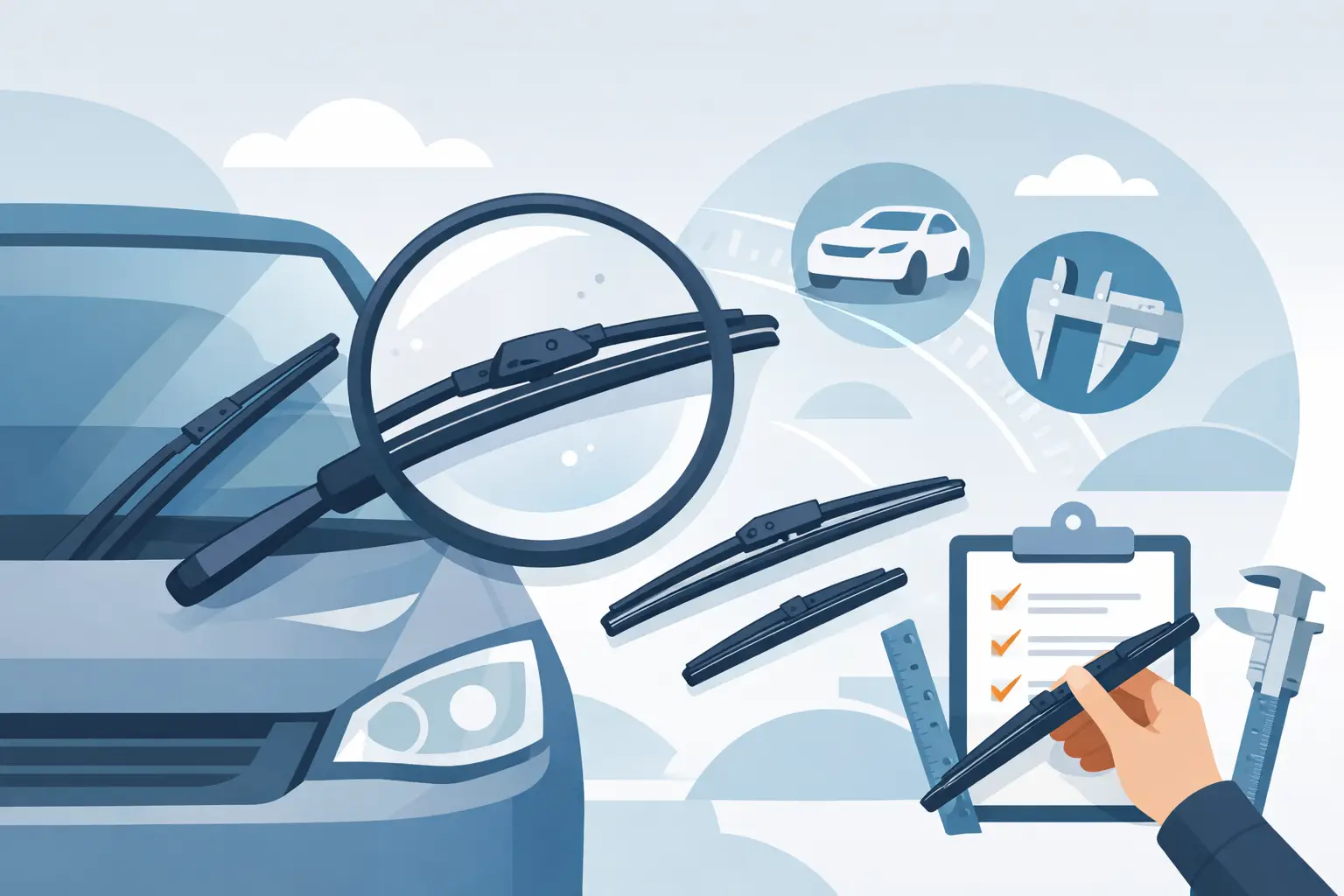
A streaky windscreen can turn a quick trip to the shops into a white-knuckle drive when rain hits. Before buying replacements, knowing how to find wiper blade size means you avoid loose-fitting blades, poor coverage and the hassle of sending the wrong pair back. The good news? For most cars, SUVs and utes, it takes less than a minute.
The easiest way to find wiper blade size
The most reliable method is to use your vehicle’s make, model and year in a vehicle-specific wiper finder. This matches blades to the exact wiper arms on your car, rather than asking you to guess based on what looks about right.
Have your vehicle details ready: the manufacturer, model, year and, where relevant, body style or series. A Toyota Corolla hatch and sedan from different generations, for example, may use different blade lengths and connectors. The same can apply to popular vehicles such as Mazda CX-5s, Ford Rangers and Holden Commodores.
A rego lookup can also be useful where available, but always check the returned vehicle details are correct before ordering. If your car has been imported, modified, or sits near a model changeover year, the make-model-year match is usually worth checking twice.
Auto Cross uses vehicle-specific fitment to take the guesswork out of the process. That matters because the right blade is not only the right length. It also needs the correct adaptor to lock securely onto your wiper arm.
Why wiper blade size is more than a number
Front wiper blades are measured in millimetres or inches, and the driver and passenger sides are often different lengths. A common setup might be a 650 mm blade on the driver’s side and a 400 mm blade on the passenger side, but there is no universal size for every vehicle.
Fitting a blade that is too long can cause it to strike the windscreen trim, collide with the other blade, or overhang the sweep area. Too short, and it leaves excess water, grime and glare right where you need a clear view. Even when the length is right, an incorrect connector can rattle, detach or simply refuse to fit.
Rear wipers need the same attention. They are often sold separately and may use a completely different mounting style from the front pair. Do not assume a rear blade is included just because you are replacing the front windscreen wipers.
How to find wiper blade size by measuring your old blades
If you cannot use a vehicle finder, measuring the blades already on your car is a practical backup. Lift each wiper arm carefully away from the windscreen and measure the rubber blade from end to end. Measure the blade itself, not the metal arm or plastic adaptor.
Record the driver-side, passenger-side and rear sizes separately. It is worth writing them down in millimetres, as this is the most common sizing used by Australian retailers. If your tape measure only shows inches, convert carefully or choose a blade listing that displays both measurements.
This method is helpful, but it has limits. Previous owners may have fitted the wrong size, and a blade can look close enough while still being incorrect. Measuring tells you the length, but not necessarily the connector type. If the old blades clash at the centre of the screen, skip sections of glass or sit awkwardly on the arms, use your vehicle details instead of copying their size.
Check the blade and adaptor design
Take a quick look at the point where the blade joins the wiper arm. The most common fitting is a J-hook, but cars can also use push-button, bayonet, side-pin or top-lock connections. Newer vehicles are especially likely to have a less common fitting.
Universal blades may come with a bag of adaptors. That can work, but it gives you more parts to sort through and more room for error. Vehicle-specific blades with pre-fit adaptors are faster to install and provide better confidence that everything locks into place properly.
Look in the owner’s manual – with one caution
Your owner’s manual may list replacement wiper sizes, particularly in the maintenance section. It can be a useful reference for an unmodified vehicle, but manuals sometimes cover multiple variants and may not spell out every blade combination.
Use the manual as a cross-check, not your only source. Confirm the exact model year and body style, then compare it against a vehicle-specific fitment result. This extra minute can save you from ordering blades for a similar-looking model with different arms.
When make, model and year are not enough
For most Australian vehicles, those three details will identify the correct kit. A few situations need closer attention, though. Model updates can happen mid-year, and a car first registered in one year may be a different build year. Imported vehicles, European variants and performance editions can also differ from local versions.
If your vehicle finder gives more than one option, check the following before choosing:
- the model series or generation, such as a vehicle code where shown
- the body style, including hatch, sedan, wagon, SUV or ute
- whether your car has a rear wiper
- the shape of the existing wiper-arm connection
You do not need to become a parts expert. You just need enough information to make sure the listing describes your actual vehicle, not the one that looks most similar on the road.
Signs it is time to replace your wiper blades
Blade size gets attention when it is time to buy, but condition matters just as much. Australian heat, UV exposure, dust, coastal salt and sudden downpours are hard on wiper rubber. A blade can look fine while its edge has hardened enough to smear water across the glass.
Replace your wipers when they leave streaks, chatter across the screen, skip during a sweep, create a hazy film or make squeaking noises. Splits in the rubber, bent blade frames and uneven wiping are also clear signs. For many drivers, replacing blades every six to 12 months is sensible, although cars parked outdoors in harsh conditions may need them sooner.
Do not wait for the first heavy storm. Wipers are a small maintenance job, but they have a direct effect on visibility when traffic, glare and wet roads demand your full attention.
Fit the new blades without damaging the windscreen
Once you have the correct size, installation is usually quick. Lift the wiper arm, remove the old blade using its release tab or hook mechanism, then click the new blade into place until it is secure. Give it a gentle tug before lowering the arm.
Never let a bare wiper arm snap back onto the windscreen. The exposed metal can chip or crack the glass. Rest it gently against a folded towel if you need both hands to work on the blade.
Before driving, use windscreen washer fluid and run the wipers for a few cycles. Check that both blades move freely, clear the screen evenly and do not hit each other or the windscreen edges. If they do, stop and recheck the fitment rather than forcing them to bed in.
A quick check before you order
The fastest route is simple: identify your exact vehicle, select it in a fitment finder, confirm whether you need front blades only or a front-and-rear set, and check the listed model details. Measuring your existing blades is useful as a second check, especially if you are unsure about a changeover-year vehicle.
Clear visibility should not require a workshop visit or a gamble at the parts shelf. Get the size right, choose blades built for Australian conditions, and the next burst of rain is just rain. No squeaks. No streaks. Just clear views.
Posts Widget



Copyright 2026 © AutoCross. | Sitemap
