
Rubber Versus Hybrid Wipers: Which Is Better?
A wiper blade can look fine from the driver’s seat right up until the first proper downpour. Then come the smears, missed patches and that distracting chatter across the windscreen. When comparing rubber versus hybrid wipers, the right choice comes down to your vehicle, local conditions and how much performance you expect from a simple maintenance job.
For most Australian drivers, clear vision in sudden rain matters more than fancy terminology. A quality blade should wipe cleanly, sit securely on the windscreen and handle heat, dust and wet weather without squeaking. Here is what separates conventional rubber-style wipers from hybrid blades, and how to choose with confidence.
Rubber versus hybrid wipers: the key difference
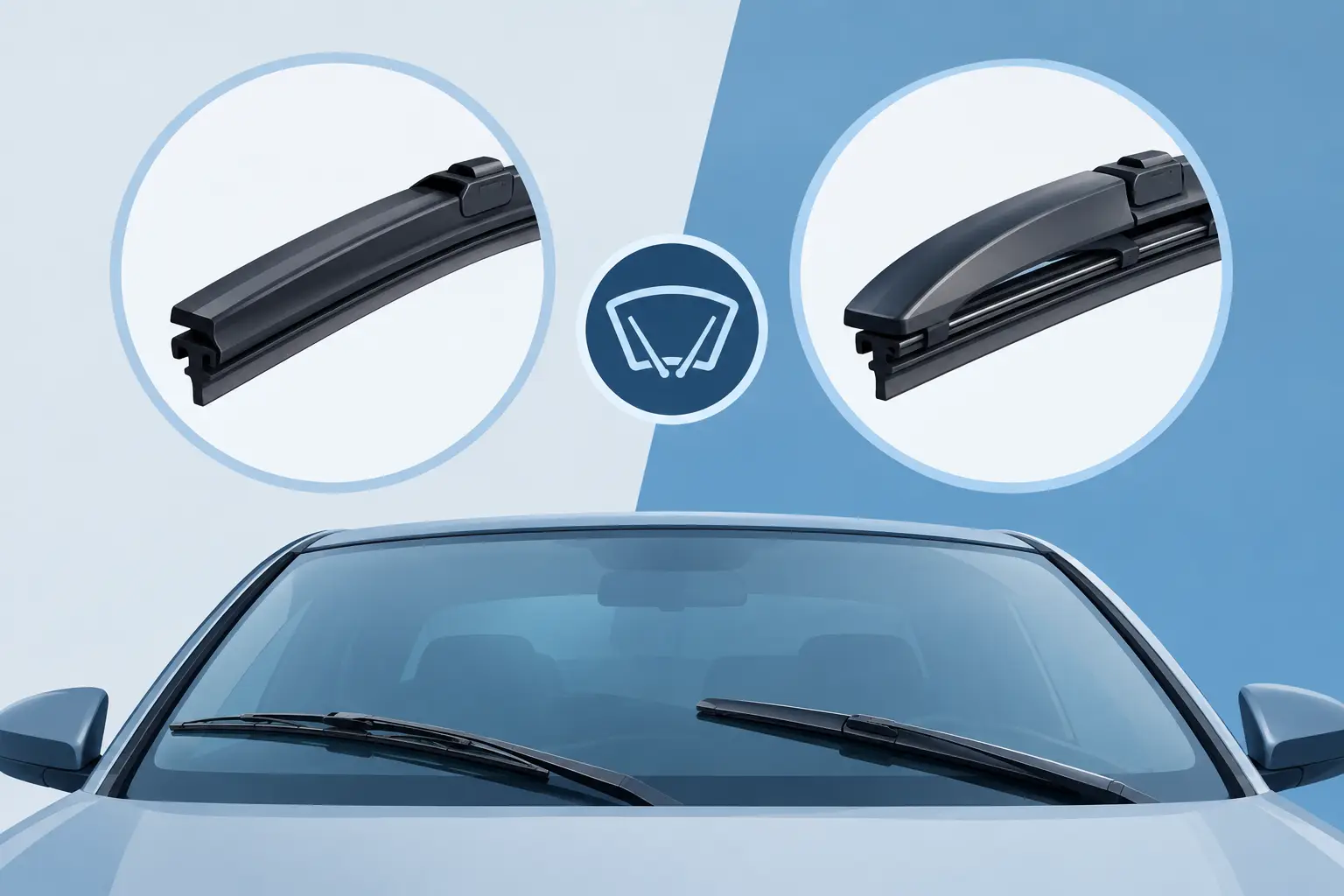
The wording can be confusing because nearly every modern wiper uses a rubber wiping edge. When people refer to “rubber wipers”, they usually mean conventional framed wiper blades. These use a visible metal or plastic frame with several pressure points that hold the rubber refill against the windscreen.
Hybrid wipers still use a rubber wiping edge, but the supporting frame is covered by a streamlined outer shell. Inside, the blade has a structured frame that applies pressure along the glass. Outside, it has the cleaner, lower-profile appearance of a beam blade.
Put simply, conventional rubber wipers are the familiar, practical design found on many older and everyday vehicles. Hybrid wipers combine that supported structure with an aerodynamic cover designed to improve performance and appearance.
Neither type is automatically right for every car. The best blade is one that matches your wiper arm, windscreen shape and the way you drive.
Conventional rubber wipers: simple, affordable and proven
A conventional blade has been doing the job for decades for good reason. Its frame uses multiple contact points to spread pressure along the rubber edge, helping it follow the curve of many windscreens. For commuters, family cars and vehicles with traditional wiper arms, this design can provide dependable wiping at an affordable price.
The main appeal is value. If your vehicle was designed for conventional blades and you mostly drive around town, a premium rubber blade can deliver quiet, streak-free performance without paying for features you may not need. Quality matters here. Cheap blades can harden quickly in Australian sun, split at the edge or lose their shape, which leads to streaks and chatter.
Conventional designs also suit many older vehicles, including cars where the wiper setup was built around a framed blade. Choosing the correct length and attachment is far more important than choosing the most expensive-looking option.
There are trade-offs. Because the frame is exposed, it can collect dust, leaves and grime. At higher speeds, the design can also be more affected by wind lift than a well-designed hybrid blade. That does not mean every conventional blade will perform poorly on the motorway. It means the quality of the blade and its fitment become especially important.
Why hybrid wipers appeal to modern drivers
Hybrid wipers are designed for drivers who want the support of a frame with a more aerodynamic profile. The outer shell helps reduce wind resistance and protects the internal structure from road grime. On SUVs, utes and late-model passenger cars that spend time at highway speeds, that can make a noticeable difference to wipe consistency.
The covered design also gives hybrid blades a neater look. If you take pride in your vehicle, it is an easy upgrade that does not involve tools, workshop bookings or a full Saturday in the driveway.
More importantly, a good hybrid blade can apply smooth, even pressure across the windscreen. That helps reduce the annoying issues drivers notice first: a blade that judders, leaves a line in front of the driver or skips over part of the glass during heavy rain.
Hybrid blades are often a strong option for Australian conditions because they are built to cope with changing weather. A windscreen might bake in summer heat, collect dust on a regional road, then face a burst of rain before the trip home. The protective shell can help keep the blade structure working cleanly through those everyday conditions.
The trade-off is price. Hybrid wipers usually cost more than a basic conventional set. They are also not universal. A hybrid blade with the wrong adaptor, wrong length or poor pressure for your windscreen will not outperform a properly fitted premium conventional blade. Perfect fit comes first.
Which wiper type suits your driving?
Start with how and where you use your car. A city commuter covering shorter trips may be perfectly served by quality conventional rubber wipers, particularly if their vehicle uses a standard hook-style arm. They are cost-effective, familiar and easy to replace.
Hybrid wipers can be worth the extra spend if you regularly travel at speed, drive long distances, park outdoors or simply want a quieter, more refined wipe. They are particularly popular on newer vehicles with curved windscreens, where consistent contact across the blade matters.
Your vehicle’s original setup is also a useful guide. If it came from the factory with hybrid or beam-style blades, replacing them with a vehicle-specific equivalent usually maintains the wiping performance the windscreen and wiper arms were designed around. Switching styles is possible on some cars, but only when the blade is compatible with the arm and clears surrounding trim correctly.
For a work ute or family SUV, do not assume bigger means better. The correct blade length is vital. A blade that is too long can hit the windscreen edge or the opposite wiper. One that is too short leaves valuable glass uncleared. That is why selecting by make, model and year is safer than measuring an old worn blade and hoping it is the original size.
Don’t overlook the rubber compound
The blade edge does the hard work, regardless of whether the wiper is conventional or hybrid. Advanced rubber compounds are made to stay flexible, resist cracking and sweep water away without leaving a hazy film behind.
A hard, dry or damaged rubber edge cannot be fixed by a better frame. If your wipers leave streaks after cleaning the windscreen, skip across the glass, squeal in light rain or leave sections unwiped, replacement is usually the smart move. Waiting until visibility is poor is not a saving.
Heat is a major factor for Australian drivers. Parking outside can expose blades to strong UV and a hot windscreen day after day. Dust, tree sap and road film add further wear. Cleaning the blade edge occasionally with a damp cloth can remove built-up grime, but it will not restore rubber that has cracked or lost its flexibility.
As a practical rule, check your blades every six to 12 months and replace them when performance drops. Drivers in hotter, dustier or high-rainfall areas may need to change them sooner.
Fitment matters more than the label
A premium hybrid wiper that does not lock properly onto the arm is no bargain. The same goes for a conventional blade that is technically the right length but uses the wrong connector. Loose fitment can cause poor wiping, noise or, in the worst case, a blade that detaches while driving.
Vehicle-specific kits remove the guesswork. Instead of sorting through a wall of near-identical adapters at an auto shop, choose your make, model and year, then receive blades matched to your vehicle’s front or rear wiper arm. Pre-fit adaptors make the change quick for most drivers, often taking less time than finding your tyre-pressure gauge.
Before fitting new blades, lift the wiper arm carefully and place a towel on the windscreen. If the bare arm slips down, it can chip or crack the glass. Once the new blade clicks into place, gently test that it is secure, lower the arm and run the washers to confirm a clean sweep.
A clear choice starts with the right blade
Choose conventional rubber wipers when you want a reliable, budget-friendly replacement for a vehicle designed around a framed blade. Choose hybrid wipers when you value a streamlined design, stronger high-speed performance and added protection around the blade structure. In both cases, quality rubber and correct vehicle fitment will matter more than the label on the box.
Auto Cross makes that decision easier with vehicle-matched wiper kits designed for straightforward fitting and dependable all-weather visibility. Before the next rain band rolls through, check your current blades while the windscreen is dry. A quick replacement now can mean no squeaks, no streaks and a much clearer view when the weather turns.
Posts Widget



Copyright 2026 © AutoCross. | Sitemap
