
Wiper Kit Comparison: Find the Right Fit
A proper wiper kit comparison matters most when the rain hits at night, headlights are glaring off the windscreen and your old blades leave a smeary strip right in your line of sight. Wipers are a small maintenance job, but clear vision is not a small thing. The right kit should fit your vehicle first go, wipe quietly and hold up through hot summers, sudden downpours and dusty regional roads.
The cheapest-looking option is not always the best value, and the most expensive one is not automatically the right choice either. For most Australian drivers, the best wiper kit is the one designed for their exact make, model and year, with durable rubber and the correct adaptor already sorted.
What to compare in a wiper kit
Start with fitment. Your front wipers may look similar to another car’s blades, but blade lengths, arm connections and curved windscreen shapes differ between vehicles. A kit that is a few centimetres too long can catch, lift or overlap. One that is too short leaves more of the screen uncleared than it should.
Vehicle-specific kits remove that guesswork. They match the required left and right blade lengths to your car, SUV or ute and include the correct pre-fit adaptor for the wiper arm. That means less time standing in the driveway trying to work out whether an attachment is meant to click, slide or lock.
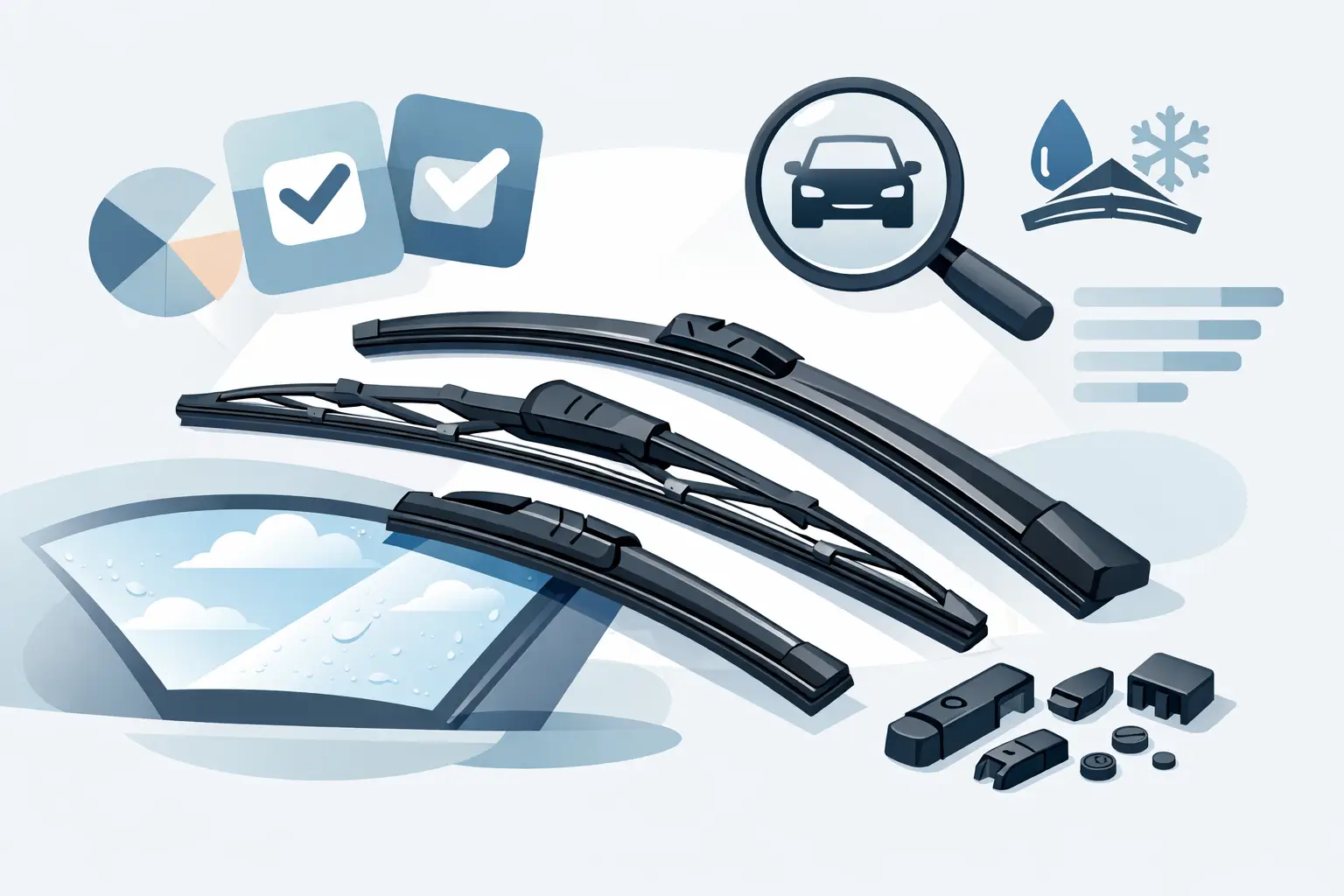
Next, compare the blade design. There are three common styles: conventional frame blades, beam blades and hybrid blades. Each has a place, but they do not deliver the same result in every condition.
| Wiper blade style | What it does well | What to watch for | | — | — | — | | Conventional frame | A familiar, basic design that can suit older vehicles | More exposed moving parts can collect dirt and wear over time | | Beam blade | Even pressure across the windscreen, quieter wiping and a cleaner aerodynamic profile | Needs the correct fitment to sit properly on the glass | | Hybrid blade | Combines a supported frame with a more streamlined outer cover | Quality varies, so rubber and adaptor fit still matter |
For many newer passenger vehicles, beam-style blades are the practical pick. Their flexible spine follows the curve of the windscreen, helping the rubber keep even contact from one side to the other. That reduces skipped patches, chatter and those annoying thin lines that remain after a pass.
Rubber quality is where cheap blades show up
The rubber edge does the hard work. It faces UV exposure, heat, dust, tree sap, road grime and plenty of dry wiping when a screen is only lightly damp. Low-grade rubber can harden or split quickly, then drag across the glass instead of clearing it cleanly.
In a worthwhile kit, look for advanced rubber designed for smooth, streak-free wiping. A clean wipe is not just about appearance. It improves your ability to spot brake lights, lane markings, pedestrians and water pooling on the road when conditions turn ugly.
Quiet operation is another useful sign. A blade can squeak because the rubber is worn, but it can also chatter when the blade does not suit the windscreen curve or is not secured correctly. New blades should glide across wet glass with steady contact. If a fresh set is noisy from day one, check that any protective covers have been removed and that the adaptor has clicked fully into place.
Vehicle-specific kits versus universal blades
Universal wipers can seem convenient because one product claims to suit many vehicles. The trade-off is that you may need to choose from several adaptors, measure the existing blades yourself and hope the connection is right. That can work for a confident DIY owner, especially on an older car, but it leaves more room for an annoying fitment mistake.
A vehicle-specific kit is built around certainty. Enter your make, model and year, then receive blades selected for that vehicle. This is especially helpful when buying for a family car, a work ute, an imported vehicle or a model with a separate rear wiper. It also makes online ordering much simpler because you are not trying to compare a row of nearly identical hooks and clips from a product photo.
The key comparison is not simply universal versus vehicle-specific. It is whether the supplier stands behind the fitment. A clear fitment guarantee, straightforward returns and a decent warranty make a real difference if something is not right. It turns a basic maintenance purchase into a low-risk one.
Do you need front and rear wipers?
Most wiper kits cover the front windscreen pair. That is generally the right starting point because front blades work together and should be replaced together. Replacing only the visibly worse blade often leaves you with uneven clearing and a second replacement job not far down the track.
Rear wipers are different. They are commonly sold as a separate blade because rear glass sizes and arm fittings vary widely. If you drive a hatch, wagon, SUV or many modern 4WDs, inspect the rear blade at the same time as the fronts. Rear visibility matters when reversing out of a tight car park, checking traffic in wet weather or towing.
You may not need a rear replacement every time. If it still wipes cleanly, sits flat against the glass and has no cracks along the edge, it can stay. But if it smears dirt across the back window or leaves a clear arc surrounded by grime, it is ready to go.
Compare performance for Australian conditions
Australian weather asks more of wipers than a quick shower now and then. Summer heat can bake rubber on the windscreen. Coastal salt spray leaves residue. Inland dust turns light rain into muddy film. In the tropics, heavy rain can arrive fast enough that weak blades become obvious within seconds.
Aerodynamic blade construction helps at higher road speeds by reducing wind lift. That matters on the motorway, but it is not the only performance feature worth paying for. Consistent pressure, a durable wiping edge and correct blade length are usually more important for everyday driving.
Also consider how often and where you drive. A city commuter may notice streaking under streetlights and in stop-start traffic. A rideshare driver needs clear visibility every day and cannot afford noisy, worn blades putting passengers off. Regional motorists may deal with bugs, dust and long wet stretches of highway. The best kit is one that handles your normal driving, not just the conditions shown on the packet.
Price should include the full job
When comparing prices, check what is actually included. A low headline price may cover one blade only, exclude the required adaptor or leave you to buy a rear blade separately. A complete front kit with matched lengths and pre-fit adaptors can be better value because it avoids a second order, a trip to the parts shop or an incorrect purchase sitting in the garage.
There is no need to pay workshop labour for a simple blade swap if the kit is designed for your vehicle. In most cases, lift the wiper arm carefully, release the old blade, click the new one into place and lower the arm gently onto the glass. Do not let the bare metal arm snap back against the windscreen. That is the fastest way to turn a small job into an expensive one.
A 12-month warranty is also worth considering. Wipers are wear items, so no blade lasts forever, but a warranty shows the seller expects its product to perform through normal use. Pair that with hassle-free returns and you have useful protection against the two concerns buyers have most: will it fit, and will it last?
When should you replace your wipers?
Replace them when they streak, smear, chatter, skip or leave sections of the windscreen unclear. Visible cracking, torn rubber and bent blade frames are clear signs too. As a general rule, inspect wipers every few months and expect replacement about every six to 12 months, depending on exposure and use.
Before blaming the blades, clean the windscreen and wipe the rubber edge with a damp cloth. Dirt can cause temporary smearing. If the problem comes straight back, the rubber is likely past its best.
For a straightforward option, Auto Cross matches premium OEM-grade wiper kits to your vehicle details, helping take fitment guesswork out of the job. No squeaks. No streaks. Just clear views.
The next time your wipers hesitate across a rain-soaked screen, do not wait for the weather to improve. Choose a kit made for your vehicle, fit it while the driveway is dry, and give yourself a clearer view before the next storm rolls through.
Posts Widget



Copyright 2025 © AutoCross.
