
Budget Wiper Kit Review for Clearer Driving
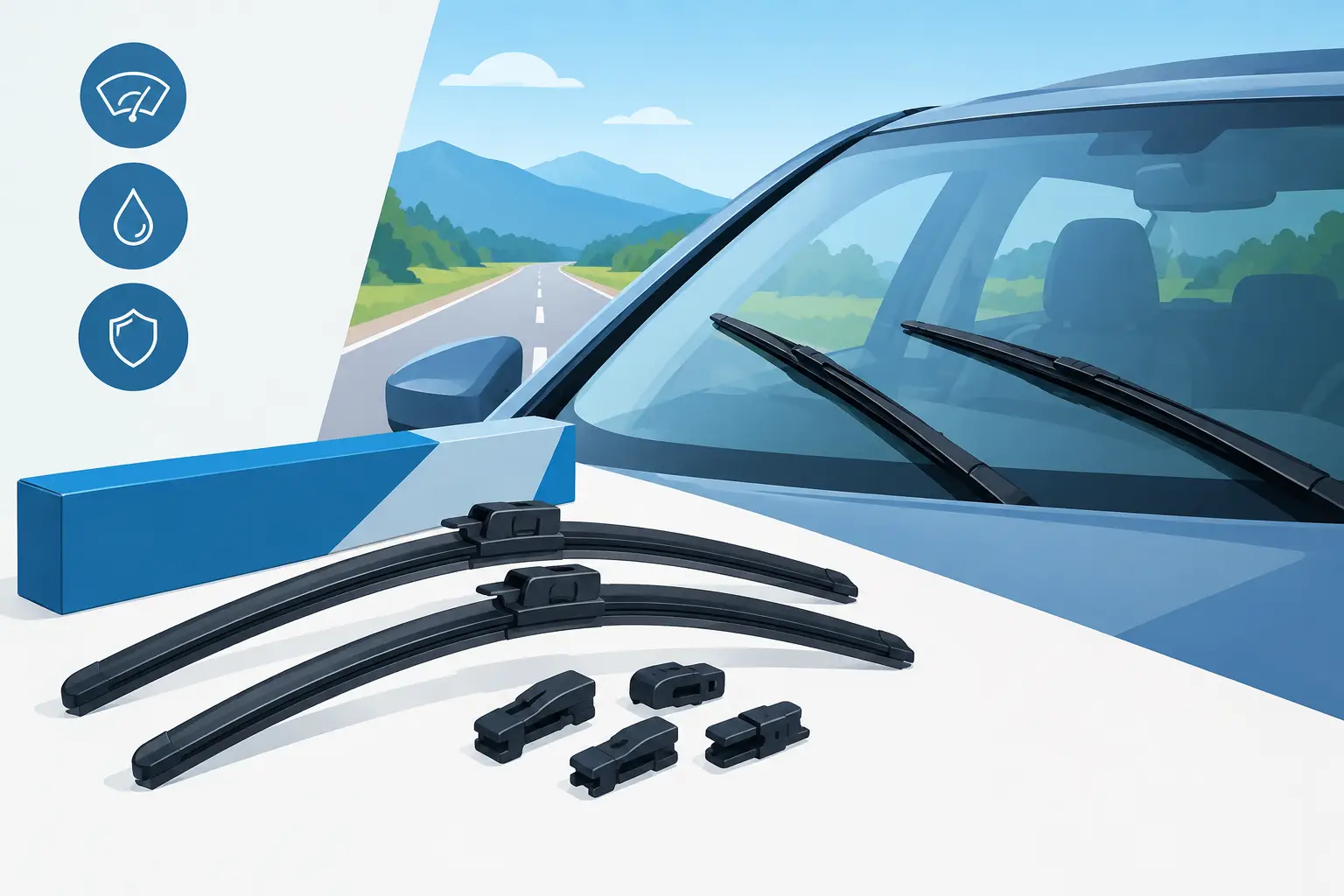
A budget wiper kit review should start with the thing that matters when rain hits the windscreen: can you see clearly and safely? A low price is welcome, but it is no bargain if the blades chatter across the glass, leave a smeary strip in your line of sight, or do not fit your car properly.
For most Australian drivers, a good-value wiper kit is not the absolute cheapest pair on a shelf. It is a vehicle-specific set that wipes cleanly, installs without fuss and lasts through hot summers, sudden downpours, coastal salt air and dusty country roads. No squeaks. No streaks. Just clear views.
Budget wiper kit review: what you should expect
The word “budget” can mean very different things. At one end are universal blades with basic rubber and a pack of loose adaptors. At the other are affordable direct-to-consumer kits designed around your make, model and year. They may both cost less than a premium dealership replacement, but their real-world experience is often very different.
A decent budget kit should deliver four non-negotiables: correct fitment, even contact across the windscreen, quiet operation and rubber that does not give up after a few weeks of harsh weather. If it misses one of these, the initial saving can disappear quickly.
The strongest value option is usually a pre-matched front pair, with a rear blade included where your vehicle needs one. This removes the guessing game around blade lengths, arm connections and adaptor styles. You should not have to stand in a car park comparing plastic clips or wondering whether a “universal” fitting is actually secure.
Fitment is worth more than a few dollars saved
A wiper blade can look close enough and still be wrong. A blade that is too long may catch the windscreen trim or overlap awkwardly. One that is too short can leave a large unwiped section of glass. The wrong adaptor may click into place but sit loose, creating noise, poor pressure or the risk of the blade detaching.
That is why vehicle-specific selection is such a useful part of buying online. Entering your vehicle make, model and year should narrow the choice to a kit built for that exact wiper arm. For imported cars, newer SUVs and utes, or older vehicles with less common fittings, this reassurance matters even more.
Auto Cross takes this approach with a vehicle finder and pre-fit adaptors, helping drivers avoid the usual compatibility headache. It is the practical difference between ordering with confidence and hoping a generic blade works when it arrives.
Where cheap wiper blades usually fall short
There is nothing wrong with spending carefully on car maintenance. But the lowest-priced wiper blades tend to cut costs in places you notice once you are on the road.
Basic rubber can harden in heat, particularly when a car spends long days parked outside. Once the wiping edge loses flexibility, it can skip across the glass instead of following its curve. You may hear chattering on a light shower, see thin water lines after each pass, or find the blade smears grime rather than clearing it.
Frame design also matters. Traditional framed blades can work well, but exposed joints collect dust and debris. In dry, dusty areas or after a run on unsealed roads, that buildup may affect how smoothly the blade moves. Aerodynamic beam-style blades have fewer exposed moving parts and can apply more consistent pressure across the screen, especially at highway speeds.
The cheapest kits can also be light on quality control. One blade may wipe acceptably while the other leaves a patch at the driver’s eye level. This is frustrating in ordinary rain and far more serious during a night drive, when glare from headlights magnifies every streak.
A low-cost kit can still be a smart buy if it is designed for your vehicle and uses durable wiping rubber. The key is not chasing the lowest ticket price. Look for value that holds up after the first week.
What good value looks like in Australian conditions
Australia puts wipers through more than rain. UV exposure, extreme heat, overnight cold, insects, tree sap and airborne dust all wear down the rubber edge. A budget kit that performs well here needs materials and construction suited to regular exposure, not just occasional drizzle.
Look for blades that promise smooth, streak-free wiping and quiet operation, backed by a clear warranty. Advanced rubber compounds are generally a better bet than thin, stiff rubber because they stay more flexible and maintain contact with the windscreen for longer. An aerodynamic profile is also helpful for commuters and regional drivers who spend plenty of time at 100 km/h.
Do not overlook the rear wiper. On hatchbacks, wagons and many SUVs, the rear screen can quickly turn into a muddy blur in wet weather. If your rear blade is split, noisy or leaving a central streak, replacing only the front pair solves only part of the visibility problem.
The best-value kits make the whole job easy: matched blade lengths, the right connections, clear installation guidance and delivery to your door. A replacement that takes under 30 seconds to fit is not just convenient. It means you are more likely to replace worn blades promptly instead of putting it off until the next storm.
How to judge a kit before you buy
Product claims are useful, but a few straightforward checks will tell you whether a budget kit is likely to be good value. Start with fitment. The retailer should ask for your make, model and year, rather than expecting you to measure old blades and decode your wiper arm yourself.
Next, check whether the kit is sold as a pair or as individual blades. A front pair is usually the sensible choice because both blades have been exposed to the same sun, dirt and use. Replacing one worn blade while leaving the other behind often gives you uneven results.
Then consider the support behind the product. A 12-month warranty and hassle-free return policy provide useful protection if there is a rare fitment issue or manufacturing fault. They also show that the seller expects the kit to last beyond a handful of wet days.
Before checkout, make sure the listing is clear about what is included. A well-presented kit should state whether it covers front wipers only or front and rear, and whether the adaptors are already fitted. Vague product details are often where “cheap” becomes inconvenient.
Fitting and caring for your new wipers
Even a quality blade will not perform at its best on a filthy windscreen. Before fitting your new kit, clean the glass with proper glass cleaner and a clean microfibre cloth. Pay attention to the lower edge of the screen, where road film, dust and wax residue often build up.
Lift the wiper arm carefully, remove the old blade according to its connection type, and click the new one into place until it is secure. Lower the arm gently onto the windscreen. Never let a bare metal wiper arm snap back against the glass, as it can crack or chip the screen.
Once fitted, test the blades using washer fluid. If you see light streaking on the first few wipes, clean the glass again and check that any protective packaging has been removed. Persistent chatter can be caused by a dirty windscreen, a damaged wiper arm or rubber that is not sitting squarely on the glass.
To extend blade life, wipe dust and grit from the rubber edge every few weeks with a damp cloth. Avoid running the wipers on a dry, dusty screen where possible. If the car has been parked under trees, clear leaves and small twigs from the blade before switching them on.
Is a budget kit the right choice for your car?
For everyday cars, family SUVs, work utes and rideshare vehicles, a well-made budget wiper kit is often the sensible choice. You do not need to pay dealership prices to get clean, quiet wiping and dependable fitment. You do need to avoid generic options that treat every wiper arm and windscreen shape as if they are the same.
There are exceptions. If your vehicle has a specialist wiper system, unusual arm design or integrated washer nozzles, confirm the kit is specifically listed for that model. The same applies if a bent wiper arm or badly scratched windscreen is causing the problem. New blades improve visibility, but they cannot correct damaged hardware or glass.
When rain starts, your windscreen should be the least interesting part of the drive. Choose the kit that fits first time, wipes cleanly and is built to handle the conditions outside your driveway. Save big. See better.
Posts Widget



Copyright 2025 © AutoCross.
