
Why Do Wipers Skip? Causes and Easy Fixes
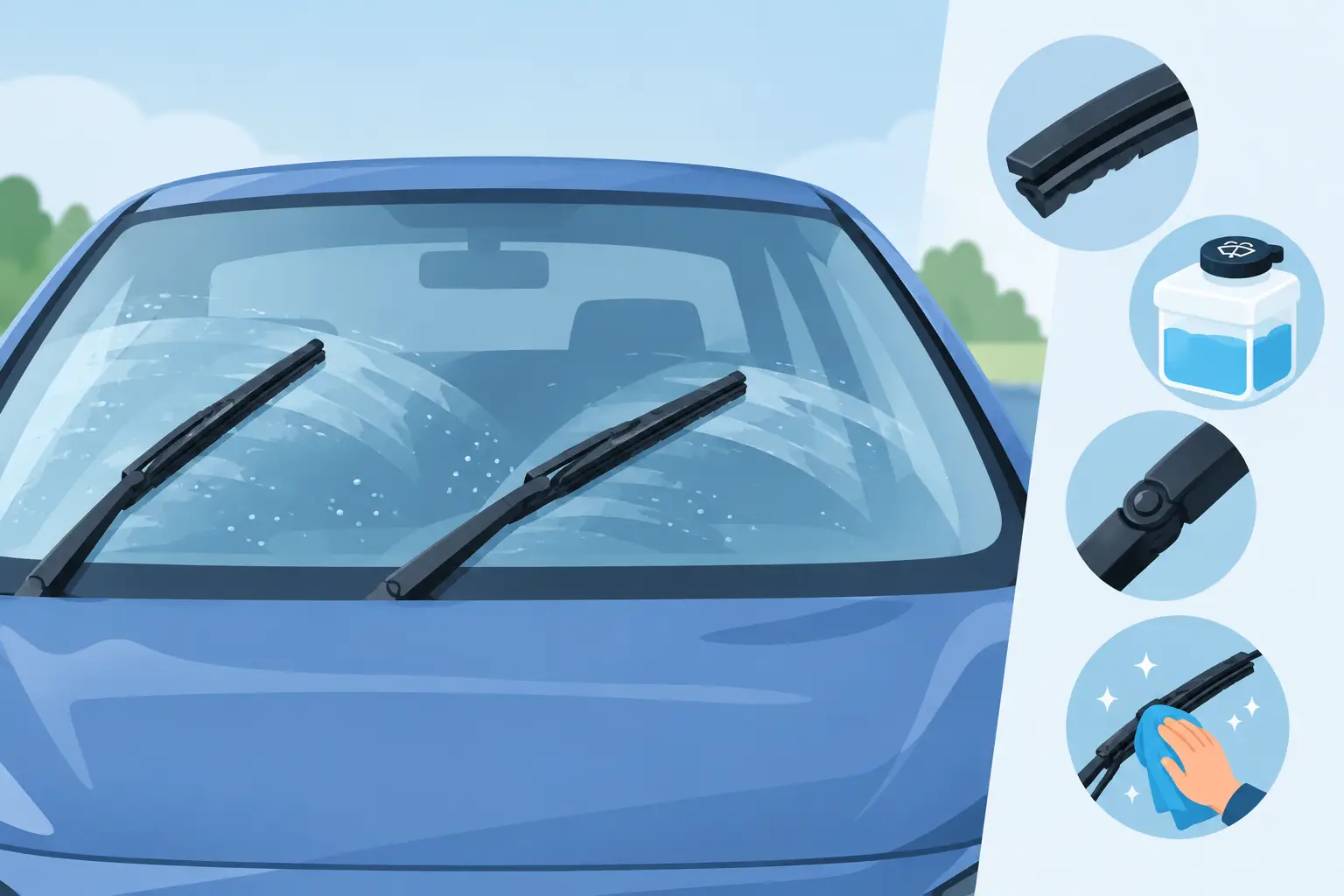
A skipped wipe is more than an annoying squeak at the lights. When rain hits hard on the M1, a blade that judders across the glass can leave smears right in your line of sight. So, why do wipers skip? Usually, the rubber, the windscreen or the wiper arm is stopping the blade from keeping even contact with the glass.
The good news is that many causes are quick to check at home. A proper clean may solve the problem. If it does not, a fresh vehicle-specific wiper blade set is one of the simplest ways to restore clear, quiet vision.
Why do wipers skip across the windscreen?
Wiper blades are designed to flex smoothly as they travel up and down the windscreen. The thin rubber edge needs to stay in contact with the glass, flip direction at each end of the sweep, and move water away without dragging. When any part of that process is interrupted, the blade can chatter, jump, squeak or skip.
Most often, the culprit is a dirty or worn blade. Road grime, dust, tree sap, insects, wax residue and oily film all build up on Australian windscreens. Even a blade that looks fine from the driver’s seat can have a rough, contaminated edge that catches instead of gliding.
Heat is another major factor. Strong sun can dry and harden the rubber, especially if your car spends its days outside. Once the edge loses its softness and flexibility, it cannot follow the windscreen’s curve properly. That is when you may notice a repeated hop across the same section of glass.
Start with a proper clean
Before replacing anything, clean both the windscreen and the blades. It is a worthwhile first step because a dirty windscreen can make new blades perform poorly too.
Lift each wiper arm away from the glass and wipe the rubber edge with a clean, damp microfibre cloth. If the cloth comes away black or gritty, keep going until it is clean. Then wash the windscreen thoroughly with automotive glass cleaner and a fresh cloth. Pay attention to the area where the blades park, as this is where grime tends to collect.
Avoid using harsh solvents, petrol or rough scourers. They can damage the rubber, mark the glass or leave a residue that causes more chatter. Also skip the temptation to wipe the blades with tyre shine or silicone sprays. A slippery coating may seem helpful for a minute, but it can smear the windscreen and reduce wiping performance.
Test the wipers with plenty of washer fluid afterwards. Never run blades over a dry, dusty windscreen just to see whether they skip. Dry wiping creates friction and can shorten the life of the rubber.
Check whether the rubber is worn or damaged
If cleaning does not fix it, inspect the blade closely. Look along the full length of the rubber edge, not just the visible ends. Replace the blade if you find splits, cracks, frayed sections, flattened rubber or areas that have started to detach from the frame.
A blade can also be worn out without looking dramatically damaged. Common signs include a thin line of water left after every pass, broad smears that return straight away, squeaking, or a blade that skips in the same place every time. If you are repeatedly reaching for the washer stalk because the view is still hazy, the blades are no longer doing their job.
As a practical rule, inspect your wipers every few months and replace them when performance drops. Many drivers find annual replacement sensible, but it depends on where the car is parked, how often it is driven and how much heat, dust and rain the blades face. A regional ute parked in full sun may need blades sooner than a garaged city runabout.
The windscreen itself may be the problem
Sometimes the blade is not the main issue. A windscreen with baked-on road film, old polish, wax from a car wash, or a water-repellent treatment that has worn unevenly can make wipers judder. The rubber grabs at patches with different levels of friction, then releases suddenly.
Give the glass a deeper clean using a product made for automotive glass. If you have recently applied a rain-repellent coating, follow its maintenance instructions. Some coatings work brilliantly with certain blades and less well with others, particularly when they are patchy or past their best.
Small chips and scratches can also interrupt a blade’s path. You may feel the blade flick at the same spot on every sweep. A minor mark does not always require immediate windscreen replacement, but a chip in the driver’s viewing area or one that is spreading deserves professional attention.
Look at the wiper arm and blade fitment
A healthy wiper arm applies steady pressure from one end of the blade to the other. If the arm is bent, loose or twisted, the blade can sit at the wrong angle and drag across the glass. This sometimes happens after someone lifts the arm too far, catches it while washing the car, or forces an ill-fitting replacement blade onto the attachment.
With the wipers switched off and parked, gently lift the arm and check for obvious looseness or damage. Do not bend it back by guesswork. Wiper arms are spring-loaded and can snap down onto the windscreen if released, potentially cracking the glass. If the arm looks bent or has weak tension, a mechanic can assess it quickly.
Fitment matters just as much. A blade that is the wrong length, has the wrong adaptor, or is not fully clicked into place may move unevenly. It can strike the windscreen trim, overlap another blade or fail to follow the curve of the glass. Generic blades can seem like a bargain until you are standing in the driveway trying to match adaptors.
Vehicle-specific kits remove that uncertainty. Auto Cross matches premium OEM-grade front and rear blades to your make, model and year, with pre-fit adaptors for a straightforward install. The aim is simple: a secure fit, smooth wiping and no guessing at the shop shelf.
Why new wipers can still skip
Brand-new blades are not automatically perfect from the first wipe. The protective coating on a new rubber edge can take a few wet cycles to settle, and residue left on the windscreen from the old blades may still cause chatter. Clean the glass before fitting new blades, then use washer fluid for the first test.
If skipping continues after a few wet wipes, check that the blade has clicked firmly into the arm and that you have fitted the correct driver and passenger sides. On many vehicles the front blades are different lengths, while rear blades often use a completely different connection. Forcing a blade into place is a warning sign, not a solution.
It also helps to use decent washer fluid rather than plain water alone. Water can leave mineral deposits and does little to cut through oily road grime. A quality washer additive helps the blades glide over a cleaner surface and improves visibility when the windscreen is covered in bugs, salt spray or city grime.
When skipping means it is time to replace the blades
Cleaning is worth trying, but do not keep nursing wipers that are clearly worn out. Replacement is the sensible call when the rubber is cracked, the blade squeaks constantly, the windscreen stays smeary after cleaning, or visibility drops whenever the weather turns.
Choose blades made for Australian conditions, with durable rubber and an aerodynamic design that keeps pressure consistent at speed. The cheapest universal option may work for a while, but correct fitment and reliable contact are what make the difference during a sudden downpour or an early-morning commute.
Replacing wiper blades is usually a quick at-home job. Park the car, turn the ignition off, lift one arm at a time and follow the fitting steps supplied with your kit. Keep a folded towel on the windscreen while you work, just in case the bare arm slips from your hand. Once fitted, wet the screen with washer fluid and check for a clean, quiet sweep.
Clear vision should not be something you put off until the next storm. If your wipers are skipping, give the glass and blades a clean today, then replace tired rubber before the next wet drive asks more of it.
Posts Widget



Copyright 2026 © AutoCross. | Sitemap
